


|
Main Index Search Profile Send Private Check Private Who's Online FAQ Erase the Hive No Encryption Logout | | ||
|
| |||
| ||||
| 2570 Registered Users | You have 0 new messages | |||
  New: Encrypted Connection! |
|
Crystal Meth | Forum index Threaded Next thread | |
|
|
|
| |||
| Subject | PART 2 OF 6: LARGE-SCALE, OLD-SKOOL METH | Reply | ||
| Posted by | Dick_Fitzbetter (Hive Bee) | |||
| Posted on | 11-27-00 09:22 | |||
Manufacture of Platinum Dioxide As those familiar with clandestine drug manufacture are aware, the traditional catalysts used in reductive amination procedures, Raney nickel and palladium-on-carbon, are no longer easily available due to essential-chemical prohibition by the anti-drug thugs. Thus there is a need for an alternative catalyst which can be manufactured utilizing common materials and equipment. Platinum dioxide has many advantages in its application to reductive aminations: • It can be made using common materials and easily obtainable equipment. • Reactions are performed at room temperature and at low pressure (30psi max), thus eliminating the requirement for simultaneous heating and agitation, and opening the door to simple high-volume manufacturing. One can easily perform 25-30 mole reactions using a 5gal paint shaker for agitation. • The catalyst is reusable up to six times. • It requires a catalyst density of only 1g/mole of precursor. • It provides a product yield of approximately 2lb/g of catalyst, and a 75% mole-to-mole yield from precursor-to-product (the reaction yield is 90%, the balance being lost during processing and crystallization) when manufacturing methamphetamine. • It is used with common ethanol solvent, eliminating odd smells and fire hazards. • It also performs well in the manufacture of methylenedioxymethamphetamine (MDMA), but under slightly different conditions. Equipment The following equipment is required: • A stirring hotplate. • A 2" Teflon-coated magnetic stirring bar with a center lifting ridge. This is simply a ridge around the center of the stirring bar that raises it above the bottom surface, thus decreasing friction and providing for easier stirring of thick solutions/suspensions. A 2.5-3.0" stirring bar will also be used and you should also have a Teflon-coated stirring bar chaser which allows retrieval of stirring bars from solutions. This is an invaluable item for general lab work. • 1000ml and 5000ml Pyrex graduated beakers. The 1000ml beaker should be thick-walled Pyrex as it needs to be slightly more heavy-duty. Do not use ordinary glass or Mason jars as we will be heating it directly on the hotplate. • A jewelers oven. These are available from jeweler's supply companies. Look in the yellow pages. They typically have a meter which monitors the temperature from 0-1200 C and a rotary adjustment knob which controls the temperature. The inside is lined with firebrick, as is the door, and there is a small vent hole at the top. Buy one with an interior width and depth of at least 9". They cost about $400 and can be purchased by anyone. An extra firebrick may be required to center the oxidation vessel. Firebricks can be found at most fireplace/woodstove stores. 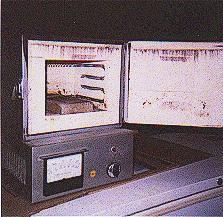 • A 1000ml round-bottom flask. • An 8" x 8" x 2" Corningware casserole dish with Pyrex top. This item is important because it is the vessel we will use to perform the oxidation procedure, which takes place at 520 C. Ordinary glass will shatter at these temperatures, and Pyrex does not hold up much better. Corningware will stand up to these temperatures and heating cycles, but just barely. The Pyrex tops that come with the casserole dish often crack or break after only one or two reactions, so extra tops should be purchased. A ceramic or clay vessel would be better, but are difficult to find in the correct size. The Corningware dishes are cheap, disposable, and can be purchased anywhere. • A 4" diameter Buchner. • A 1000ml filter flask. • Whatman Qualitative #5 filter papers. Purchase the size that fits your largest Buchner and cut to fit for the smaller Buchners. These filters will catch the finest particles of catalyst. Equivalent filter paper is made by other manufacturers. • A mortar-and-pestle set, medium-sized. These can be found at many organic food and food-supplement stores, as well as in children's science shops. Chemicals The following chemicals will be used: • Laboratory grade 37% hydrochloric acid. You can try hardware store muriatic acid if it is 30% or better. It is unknown what the impurities in cheap hardware-store stuff may do to the catalyst, but many times the only difference between laboratory grade chemicals and commercial grade stuff is the fact that the laboratory grade chems have been tested to make sure there's nothing strange in them. It may have come out of the same tanker car, but it was tested. • 200ml of 70% nitric acid, in order to make aquaregia. Jewelers can buy this in very small quantities for making aquaregia, which is required to dissolve metals like platinum and rhodium for alloying or plating. Otherwise, it can be made fairly easily. • About 3kg of sodium or potassium nitrate. This is our oxidizer, and is used at a 10:1 weight ratio with ammonium chloroplatinate (which we will make). It can also be used to manufacture 70% nitric acid. Sodium nitrate is preferred, but only because I have used it extensively. Use the powdered form as it requires less grinding and seems to work better than the beaded form often found in university labs. • About 3kg of ammonium chloride. This common salt is used for metal preparation and making chilling solutions. It should not be difficult to find. Step 1: Dissolution of Platinum in Aquaregia The first thing to do is dissolve the platinum, either in coin form or as spent catalyst, in aquaregia to make chloroplatinic acid. This is not as easy as may first appear. Platinum coins are especially difficult to dissolve. Left on their own, it could take months for them to completely dissolve. Heating to just below the boiling point of the acid will increase the activity of the acid many times and let you dissolve th coins in 3-4 days. Spent catalyst may also be recycled, and will dissolve much more quickly than coins. This procedure must be performed inside a properly functioning fume cabinet or the fumes will fucking kill you! (See Part 6 construction details). Place a 1000ml Pyrex beaker on the stirring hotplate. Place a 2" Teflon-coated stirbar with a center ridge inside the beaker. If you are using fresh 1oz platinum coins, gently place two of them (64g) in the beaker. There should be room for the stirbar to turn without touching the coins. Two coins is the very most you should attempt to dissolve in 800ml of aquaregia as additional platinum will not dissolve and react but will remain as unreacted particles in suspension, screwing up subsequent procedures. (If you are recycling spent platinum dioxide catalyst, wait until after the aquaregia is made and stirring, but not heating, is begun before adding the spent catalyst in small portions.) Add 200ml of 70% nitric acid. Add 600ml of laboratory grade 37% hydrochloric acid. Once the platinum and aquaregia are inside the beaker, fill a 1000ml round-bottom flask half full of cold tap water. Dry the outside with a paper towel and carefully place it on top of the beaker. Make sure there is an air gap at the pouring lip of the beaker so no pressure builds up. This is our makeshift condenser, designed to condense and recycle the aquaregia while the platinum dissolves. Without the condenser, the aquaregia will quickly boil off without dissolving much platinum. Do not fill the 1000ml flask to more than 1/3 or 1/2 full or it will become top-heavy and tip over from the vibration. Begin heating while stirring, slowly raising the temperature over several hours until the first signs of boiling begin. On my stirring hotplate, an 800-watt unit, the heat setting is 3.5-3.75. The solution will turn orange, and then a very deep ruby red. Do not leave the reaction unattended for more than a few minutes, and turn it off at night. When recycling spent catalyst, a small amount of contaminant may appear on the surface. Let the beaker cool until it can be handled and then filter the liquid through your 4" Buchner using filter paper, holding the coins in place with the Teflon-coated stirbar chaser. Do not use any metal, as it can contaminate the batch. A more porous grade of filter paper may be used. Pour the filtrate back into the beaker with the coins and continue the heating and stirring. It should take 3-4 days to dissolve two coins. The variables affecting dissolution speed are surface area, acid temperature, and stirring effectiveness. Mix up a saturated solution of ammonium chloride in distilled water. Pour 3000ml of distilled water into a 5000ml beaker (or 1gal pickle jar) along with a 3" stirring bar. Place on a stirplate if available, otherwise stir using a clean spatula from the kitchen. With stirring, slowly add ammonium chloride to the water until it won't dissolve any more. Continue stirring occasionally until the solution comes up to room temperature once again, then add more ammonium chloride until no more will dissolve. Repeat one more time. When finished, you should have a room temperature solution with a little undissolved ammonium chloride at the bottom. Once the platinum is completely dissolved, remove the condenser flask and allow the remaining acid to boil off until it is all gone and there remains in the bottom of the beaker a grayish-red-black layer of ugly metallic stuff. This is chloroplatinic acid. Be aware that the fumes created when boiling off the acid will create large, very visible clouds of acid-laced fog if exhausted into cool, still air. In addition, all nearby plant life will turn brown and quickly die. If performed while a stiff breeze is blowing, this hazard is eliminated. Let the beaker cool down, add 500ml of 37% hydrochloric acid, let it react with the chloroplatinic acid, then boil off the acid almost to dryness. Do this three times to remove any trace of nitric acid, boiling off the acid to dryness on the third boil. Once cool, add small portions of ammonium chloride solution and work it with the end of a stirbar chaser. Continue adding ammonium chloride solution until all of the chloroplatinic acid has reacted and there are no solid chunks left. Decant into another clean beaker or jar as the beaker fills. A bright yellow suspension will form as the chloroplatinic acid reacts with the ammonium ion to make ammonium chloroplatinate. Do not hurry. It can take over an hour for the chloroplatinic acid to completely react. Black particles or other discoloration is a sign of incomplete dissolution of the platinum. Remove the water by vacuum filtering through the 4" Buchner with Qualitative 5 filter paper using a water aspirator or vacuum pump. This also may take several hours. Remove the pasty ammonium chloroplatinate cake and break it up as finely as possible using a clean razor knife in a glass bowl or plate. It will be difficult to handle and a little sticky. At this point you must improvise a little. I use a vacuum oven purchased at a mining equipment sale (mines do a lot of inorganic chemistry) to gently vacuum dry the ammonium chloroplatinate overnight at low heat. Those without vacuum ovens should use an infrared lamp placed near the plate and be patient. Do not overheat, as ammonium chloroplatinate will decompose. Look for any brown or black discoloration as a sign of excess heat. Break up into smaller chunks as the paste dries. Dried ammonium chloroplatinate is hard, granular, and dark yellow in color. Ammonium chloroplatinate is a convenient form in which to store catalyst, as platinum dioxide catalyst can be extremely pyrophorric (this stuff explodes!). Store in a cool, dry place and oxidize it as the need for fresh catalyst arises. If you started with 64g of platinum coins (Pt, 195g/mole, 0.328mole), you should end up with slightly less than 0.328 mole of ammonium chloroplatinate ((NH4)2PtCl6, 443.9g/mole), or about 140g. This is enough to make about 50g of useful catalyst, which translates to 150-300 moles worth of reactions, or about 40-80lb of very pure methamphetamine, depending upon how many times ou are able to reuse the catalyst. Step 2: Oxidation of Ammonium Chloroplatinate to Platinum Dioxide This is where the rubber meets the road in this procedure. We must mix our ammonium chloroplatinate with sodium nitrate, our oxidizer, and burn it. In the old days, when Adams invented this catalyst, he used a copper-alloy block with a crucible and a hole drilled for the insertion of a thermometer to measure the temperature. Our procedure isn't much better, but if Adams could do it with crude equipment, you can optimistically expect to do as well. At this point, I must point out that I never made a batch of catalyst that did not work, even though experiments were performed over the temperature range of 480-530 C. This is not due to some extraordinary intelligence or experience. It's just because this is easy to do. The ammonium chloroplatinate must come into "intimate contact" with the oxidizer, according to Adams. To accomplish this, place 50g of sodium nitrate in a layer at the bottom of your mortar-and-pestle set. Add 5g of ammonium chloroplatinate chunks to the bed and grind until all chunks are thoroughly blended into a homogenous yellow powder. Be thorough here, as it will pay off in catalyst yield. Shake the mixture into the 8" x 8" Corningware casserole dish. Do this five times for a total of 25g of ammonium chloroplatinate and 250g of sodium nitrate. Do not attempt to do more than this because it will make a terrible mess in the oven. A safer amount is 20g, but 25g batches will work reliably if the oven is controlled properly. Spread the yellow powder evenly across the bottom of the casserole dish, replace the Pyrex cover, and place the dish into the jeweler's oven. The idea here is to place the dish so the temperature on the front meter accurately reflects the temperature inside the vessel. If you have a large oven with the temperature sensor in the center, adjust the position of the dish with varying thicknesses of firebrick. If the heating element runs directly beneath the dish, spot heating should be avoided by placing a thin firebrick across the bottom. We are operating close to the temperature limits of the vessel material, so a little diligence is required. The oven should be placed inside the fume cabinet where the noxious fumes produced can be exhausted, preferably into a stiff wind at night. Secure the latch on the oven. On my oven, the temperature control is graduated from 1 to 10. I set the control on 3.75, having learned the hard way that too-rapid heating will shatter the casserole dish. The temperature will slowly climb over a period of 2.5-3.0 hours to 520 C, at which point the heating element is turned off and the chemist leaves the oven to cool down overnight. He does not open the door of the oven, even a crack, until the temperature is all the way down. Failure to exercise patience will be swiftly punished with a shattered dish and a nasty mess. You should watch the oven carefully, noting that the heating element cycles on and off, and correlate that with changes on the temperature indicator. This will improve your precision in controlling the oven temperature. A plume of brown fumes should begin to rise from the exhaust hole at the top as the oxidation begins. This usually occurs starting at 380-400 degrees C and can continue all the way up to about 500 degrees, but not always, and not predictably. I have discovered empirically that the temperature range over which catalyst can be successfully produced is 490-520 degrees C, with the best catalyst being made at 510 degrees. As the meters used on these ovens are the inexpensive current-shunt type, they are accurate to about +-2%, which is about 10 degrees either way, so there can be as much as 20 degrees variance in the temperature indicator from unit to unit. In addition, the temperature sensors used have tolerances that can stack up in the wrong direction. The point here is that your oven may read differently than mine, so you should be observant and adjust the setting based upon the results of the previous oxidation. If the stuff turned out burnt, lower the temperature. Open the door-latch of the cold oven and remove the casserole dish. Pry the top off gently with a screwdriver, as it will be fused with white sodium nitrate residue. Inside will be a layer of hardened sodium nitrate mixed with and covering a layer of brown-black powder which will have spattered and coated the inside surface. Pour some distilled water into the top and gently work it with a plastic spoon to dissolve the sodium nitrate and free up the platinum dioxide particles. Carefully pour the resulting liquid into the clean 5000ml beaker. Repeat to recover the last traces of catalyst stuck to the cover. Pour distilled water into the casserole dish until the bottom layer is covered and break up the hard layer as gently as possible with a clean screwdriver. Work the chunks until they are broken up into pieces small enough to handle. Using surgical gloves, very carefully place the larger pieces into the 5000ml beaker, rinsing your fingers with distilled water into the beaker. Once the large pieces have been removed, add water and work the dish until you are satisfied that as much catalyst as possible has been recovered. Add distilled water to the large beaker until it is almost full and stir until all of the sodium nitrate has dissolved and you are left with a dark brown suspension that gradually settles to the bottom of the beaker. Let it settle overnight. Then carefully decant the water without disturbing the catalyst layer at the bottom. Decant as much water as possible without losing catalyst, then refill with more distilled water, stir thoroughly for 15 minutes, then let it settle overnight once again. Do this four times to insure all the nitrate is dissolved and removed. Successive washings will result in the catalyst taking longer and longer to settle out, until, on the fourth one, the catalyst may become colloidal and not settle out completely. Using the Whatman Qualitative 5 filter paper and a clean Buchner, filter the catalyst suspension, washing the beaker with distilled water to catch the last grains. You should now have a layer of wet, medium-to-dark brown catalyst in the Buchner. Gently work the small cake loose onto a small glass or porcelain plate and spread it out using a fine-tipped razor-knife. Let it dry in a warm (but not hot) place. Once dry, carefully scrape the loose powder into a clean spice bottle, which makes an ideal container. Do not let it fall freely through the air more than a few inches as this can, and will, result in an unintentional pyrotechnics display as your catalyst explodes while you watch. This is especially true when the temperature drops below freezing or if you are in a very dry area. You should now have about 11g of platinum dioxide (PtO2, 227.09g/mole, 0.048mole) for a yield of about 85%. Repeat the above steps until all the ammonium chloroplatinate is used. You should have 50-60g of catalyst in the form of a very finely divided dry brown powder. Store in a cool, dry place and avoid static discharges. There is some debate about whether or not this catalyst decreases in activity level over periods of time exceeding 6-12 months. It has been my experience that the catalyst itself maintains its activity level as long as it has not been pre-reduced or otherwise exposed to concentrated hydrogen. There are many other factors that can easily cause a decrease in yield, or an increase in reduction time, that can be misinterpreted as a change in catalyst activity. This catalyst is very sensitive to the level of self-oxidation or residual acids in the P2P. In addition, slight variations in agitation effectiveness can appear to be catalyst-related. ô¿ô |
||||
|
| |||
|
| |||
| Subject | Re: PART 2 OF 6: LARGE-SCALE, OLD-SKOOL METH  |
Reply | ||
| Posted by | terbium (Hive Bee) | |||
| Posted on | 11-27-00 09:50 | |||
In reply to: Bull shit! |
||||
|
| |||
|
| |||
| Subject | Re: PART 2 OF 6: LARGE-SCALE, OLD-SKOOL METH |
Reply | ||
| Posted by | Dick_Fitzbetter (Hive Bee) | |||
| Posted on | 11-27-00 12:02 | |||
In reply to:
In reply to:
In reply to:
ô¿ô |
||||
|
| |||
|
| |||
| Subject | Re: PART 2 OF 6: LARGE-SCALE, OLD-SKOOL METH |
Reply | ||
| Posted by | terbium (Hive Bee) | |||
| Posted on | 11-27-00 14:10 | |||
In reply to:
In reply to: Telling people that Adam's catalyst is pyrophoric "explodes" when it isn't is "insignificant"? You are a fucking moron! These posts sound like they are by someone who has never been inside a lab except in his dreams. |
||||
|
| |||