


|
Main Index Search Profile Send Private Check Private Who's Online FAQ Erase the Hive No Encryption Logout | | ||
|
| |||
| ||||
| 2570 Registered Users | You have 0 new messages | |||
  New: Encrypted Connection! |
|
Crystal Meth | Previous thread Forum index Threaded Next thread | |
|
|
|
| |||
| Subject | PART 4 OF 6: LARGE-SCALE, OLD-SKOOL METH | Reply | ||
| Posted by | Dick_Fitzbetter (Hive Bee) | |||
| Posted on | 11-27-00 09:19 | |||
Manufacture of Methylamine from Formaldehyde and Ammonium Chloride The use of phenylacetones as precursors to Meth and Ecstasy require methylamine to complete the reaction. Fortunately, it is fairly easy, if time consuming, to manufacture. Both formaldehyde and ammonium chloride are easily obtainable chemicals used extensively in industry. You can divert formaldehyde from taxidermists and ammonium chloride from many plating shops and even the drugstore. Once again, we have a two-step procedure; the first involves making methylamine hydrochloride crystals which are stored in the freezer until used, and then a purification step where the methylamine is collected and diluted. Equipment You will need the following equipment: • A rigid-base 10-liter heating mantle with dual controls • Two 10-liter round-bottom 3-neck flasks • Three 2000ml RB flasks • A 30cm West condenser • A 500ml dropping funnel • A 75cm dual-surface reflux condenser with 24/40 joints (bottom male, top female) • Several clean 5-liter and 5-gal buckets with tops • A fabricated condenser capable of condensing ammonia (bp = -33 C). This condenser is made using a 1gal paint can and a section of 1/4" brake line found at the auto parts store. About 24" of brake line is carefully coiled into a spiral that fits inside the paint can. An exit tube about 2" long and an entrance are brazed to the can. There must be no leaks at the bottom. Also, the coiled brake line must not have any section that is crimped or runs "uphill", which would cause a serious back-pressure problem. When filled about 1/3 with methanol or ethanol and chilled with dry ice, this condenser will be at -75 C, which is cold enough to condense ammonia. Wrap the paint can with pipe insulation and duct tape (without insulation, the dry ice must be replenished at too frequent intervals). I attached a mounting handle but later discovered that it is much easier to simply set it on a table or bench at the proper height. Do a test run with alcohol and dry ice to see if any leaks appear when the brazing is rapidly chilled. Check to see that water runs smoothly through the condenser without any back-pressure. This is NOT a piece of equipment you want to test the first time you try to use it. 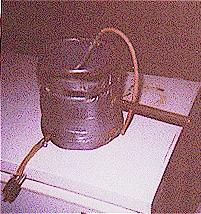 .jpg) • In addition to the dry ice condenser, we will need to circulate ice water through a reflux condenser in order to condense out any water vapor that may accompany the methylamine gas. I purchased a perfectly good circulating chiller at a mining equipment sale that pumps -20 C antifreeze solution. Otherwise, you can make a perfectly acceptable chiller out of aquarium pumps and a 10-gallon Coleman ice chest. Connect two aquarium pumps together in parallel so if one pump fails in the middle of the reaction the other can continue on until the procedure is finished. Drill holes in the top of the cooler for the pump cord and circulating lines. Add a layer of water on the bottom and drop in several bags of ice. As the ice melts, add more. This will give us about a 1 C circulating solution. If a colder solution is desired, you simply use cheap plumbing antifreeze that won’t freeze at -30 C and chill it with dry ice instead of water ice. The pumps may become unreliable at the reduced temperature. Chemicals To make a useful amount of methylamine, the following are required: • 10-20gal of 35-40% Formaldehyde • 10kg sodium hydroxide (lye) • Distilled water • A 40lb block of dry ice, wrapped in newspaper and stored in a good ice chest • About 40lb of ice cubes or block ice from the supermarket • 40-50kg of ammonium chloride. Industrial grade ammonium chloride is normally mixed with a little calcium chloride to keep it from clumping up and hardening and is called "treated" ammonium chloride. The calcium chloride does not affect the reaction, so you can use the cheap industrial 50lb bags. Making the Methylamine Hydrochloride Set up the 10-liter rigid base heating mantle inside the fume cabinet. We will be generating some formaldehyde gas that you do not want to breathe. Charge the reaction vessel with 3kg of ammonium chloride and 6 liters of 35-40% formaldehyde. The ammonium chloride will not dissolve, so stir it with a section of wooden dowling. Attach a 30cm West condenser, a vacuum takeoff, and a 2000ml receiver RB flask. Lead a short section of plastic tubing from the vacuum takeoff to a small pail of water. Use a clamp to place the end of the tube just under the surface of the water. Some of the gas generated will be absorbed by the water; the rest will go out the vent. Place a one-hole rubber stopper with a thermometer into one of the side holes on the triple-neck so the solution temperature can be easily read. Then turn on the heat, setting the controls to 70% full-scale for a short time. When the solution temperature reaches 60 C, reduce the heat controls to about 25% and slowly bring the temperature up to 100 C. The ammonium chloride will now start to dissolve, and can be aided with some quick stirring with a dowling rod. As the solution reaches 70 C, a little gas will begin bubbling in the water pail. As the temperature climbs towards 100 C, a lot of gas will be generated, causing pressure inside the vessel. The pressure builds up because of the back pressure created by the West condenser, which is too small. In fact, the condenser is the limiting factor in this reaction, otherwise you would use a 22-liter setup and double the volume. I have performed this reaction in a 22-liter rig and do not recommend it. Those familiar with methylamine manufacture will wonder why a pot of oil warmed to the correct temperature is not used; the answer is that I discovered the solution temperature can be held at 104-106 C using a carefully controlled heating mantle. You will need to play with the control adjustments a little, but it is not difficult. If you experience difficulties holding a stable temperature, simply go back to the oil pot method. Reduce the heat to about 15% when the solution temperature reaches 100 C. Once the solution stabilizes at 105 C and the gas no longer bubbles in the water pail, you can apply an aspirator vacuum at 15-30 minute intervals over the next 5 hours. At the end of 5 hours, turn off the heat, remove the triple-neck from the heating mantle, and let it cool down overnight to room temperature. The cooling causes a lot of ammonium chloride crystals to precipitate out of solution. Filter out the crystals, saving them in a separate bucket for later re-use, and save the light yellow filtrate in another bucket. Repeat this procedure several more times until a 20-24 liter bucket is full of liquid. Next, set up the 10 liter triple-neck in the same manner as before and add about 7 liters of the accumulated intermediate-stage liquid. Set the heating mantle to about 30% and apply an aspirator vacuum of -28"Hg using a bleeder on the vacuum system. You should be careful to thoroughly grease all fittings with Dow-Corning High Vacuum Grease or its equivalent to prevent glassware freeze-ups. Now patiently distill water and acid out of the mixture until solids begin to come out of solution and strong bumping begins to occur inside the reaction vessel. This can take 5-6 hours or longer. At this point, turn off the heat, disassemble the rig, and pour the contents of the reaction vessel into a bucket inside the fume cabinet. Leave overnight to cool down to room temperature, at which point there will be another large slug of ammonium chloride crystals to filter out. This time, however, a little methylamine hydrochloride will be mixed in with the ammonium chloride. Because methylamine hydrochloride is very hygroscopic, the salts may be gooey. Filter through a Buchner, keeping the recovered salts in one bucket and the yellowish liquid in another. Repeat until there is enough liquid in the second-stage bucket to proceed to the third stage. You should be getting the idea now that you can increase the throughput in the system by simply setting up another 10-liter rig and processing in parallel. By organizing the separate stages properly, one person can produce about 80 liters of 40% methylamine in 9 weeks if you are dedicated. This is enough to make 175lb of pure methamphetamine! In the third step, we use the second-stage liquid we have collected and pull more water and acid out of the solution using a vacuum of 26-27"Hg, which is slightly lower than the vacuum used during the second stage. The vacuum setting is important because if the vacuum is too strong it will induce bumping inside the reaction vessel and if it is too weak, not enough water will be pulled out to give us good quality crystals that do not melt the instant they contact moist air. Pull as much water as possible out of the solution before the methylamine hydrochloride crystals precipitate out of solution and strong bumping begins. Then pull the reaction and let the hot mixture cool overnight. Using a clean Buchner, filter out the methylamine hydrochloride crystals thoroughly. Dump them into a 5 gallon bucket that has been resting in the freezer for a few days. Methylamine hydrochloride crystals are whitish platelet-type crystals. Keeping these crystals in the freezer where it is too cold for water to remain in the air prevents the crystals from picking up water from the air and melting. Throw out the residual thick golden liquid. Repeat the procedure until you have accumulated a full 5-gal bucket of frozen crystals, which is the amount you can turn into methylamine solution in one day. Making the Methylamine Solution In this step we will mix methylamine hydrochloride and sodium hydroxide to release methylamine gas, which is then condensed with dry ice-/alcohol, allowing us to collect pure methylamine liquid and store it in a water solution. Before you can proceed, you must do some preparatory work to make things go smoothly. About 8 liters of 50% sodium hydroxide solution must be prepared the night before. In addition, a one gallon bottle (used wine jugs) containing 2kg of crushed ice should be placed in the bottom of the freezer several days ahead of time. We will need to dilute the liquid methylamine with distilled water unless you intend to manufacture Ecstasy, in which case you will want to mix the pure methylamine with ethanol that has been frozen for a week or so, and store it in the deep freeze. Methylamine/ethanol will not keep long because the methylamine will eventually boil away even in the freezer, but it is much safer than storing pure methylamine by itself. The methylamine/alcohol solution should be used within a week. Methylamine/water will keep well for years if kept cold. You should be aware that this step can be very dangerous to life and liberty. Done improperly, this procedure can, and will, result in extremely stinky and poisonous methylamine gas filling the structure and pouring out into the street where everyone within a mile will smell it. The building will continue to stink until it is torn down and the unlucky chemist who experiences this will also stink for a long time. You must be sober and paying close attention while performing this procedure. To set up the equipment, place a 10-liter heating mantle on the floor near the fume cabinet so any loose fumes will get sucked out. Place a clean triple-neck into the mantle. .jpg) Mount a 75cm dual-surface reflux condenser in a tri-grip attached to a 36" lab stand. Attach the chiller lines with the input at the bottom and the output at the top and start up the chiller pump. The top of the reflux condenser should be within inches of a table or benchtop. Place the methylamine condenser on the bench and connect it to the condenser using a section of Tygon tubing and a pigtail that fits a 24/40 glass joint. Do not use rigid connections between the different mechanical assemblies. A pigtail can be made from a section of glass tubing and a 24/40 plug for those with some experience with glass. The exit end of our paint-can condenser is connected with Tygon tubing to a two-hole rubber stopper that fits snugly into a 24/40 glass joint. Inserted into the stopper are a 4" section of glass tubing and a 3" section. Attach the Tygon to the longer section. Cut a section of plastic tubing that leads from the short stopper tube to the inside of the fume cabinet. This is our vent. Next, carefully weigh three 2000ml RB flasks and write it down somewhere, and identify each flask with a piece of duct tape around the neck. It is important to be able to determine exactly how much methylamine you have made when it comes time to dilute it with water. Do not use markers on the flasks as the writing will disappear with alcohol; use duct tape on the necks instead. Next, place a 36" lab stand and ring (about 6-8") near the bench and our methylamine condenser. Use a 5-liter plastic bucket wrapped in insulation on the sides and place it at a height where the 2000ml receiver flask will sit in it nicely without requiring a long section of tubing between the condenser and the receiver. Hook the bucket handle over the top of the lab stand for safety, then attach a tri-grip around the neck of the 2000ml receiver. The receiver must be held rigidly in place or it will float and bob around in the bucket when we add alcohol and dry ice. The receiver must be kept at -75 C or the methylamine will boil away on us. Methylamine has a boiling point of -6 C, so this stuff will boil away even when it’s kept in the deep freeze. We must also insure that our stopper will not pop out of the receiving flask by accident, so buy some Velcro strips at the variety store, slide a narrow strip between the glass tubes on the top surface of the stopper and use another strip wrapped around the receiver neck, once the stopper is in place, to trap the ends and tie the entire works together. Use Velcro because tapes and other chemical-based bonding materials become fragile at -70 C. Lastly, charge both the paint can and bucket with methanol and slowly chill them down by adding chunks of dry ice, one at a time, until they no longer quickly boil away but remain solid at the bottom. The paint can should be about 75% full and the bucket filled to a point at least halfway up the receiving flask. We are now ready to rock and roll. Using a wide-mouth funnel and a piece of wooden dowling, shove methylamine hydrochloride crystals from the freezer into the triple-neck until it is no more than 1/3 full. Attach the reflux condenser to the triple-neck and place the 500ml dropping funnel into one side neck. With the stopcock closed, charge it with 50% lye solution. Using a funnel, quickly add 400g of dry sodium hydroxide to the main reaction vessel. Quickly plug the neck with a glass plug. As soon as the lye contacts the methylamine crystals it produces methylamine gas and sodium chloride (salt). After an initial burst, which one can watch run into the receiving vessel, the reaction will subside. Now is a good time to check and insure that all fittings are tight and there is no blockage in the condenser, which can be disastrous. Next, open the stopcock and allow the lye solution to stream in. It can be difficult to know when too much lye has been added because there is a delay before the reaction reaches a peak, so it is recommended that you proceed slowly, carefully watching the receiving flask for signs of too much liquid coming through. Methylamine is a clear liquid with a density of about 0.7. Keep the paint can and receiver bucket charged with dry ice and the chiller with water ice while lye solution is added at intervals. After an addition, wait until the condensation subsides before adding more lye. Eventually, adding more lye solution will not produce any more liquid methylamine and we must boil the remaining methylamine out of the solution of water, salt, methylamine, and dimethylamine. The remaining methylamine is now in a water solution, which we would prefer not to happen, but there must also be enough water to dissolve the salt and hold the dimethylamine in solution, so do not cut back on the water used in the lye solution. Turn the heating mantle to 50% and wait, keeping things cold as you do. Over the next two hours the remaining 60-70% of the methylamine will boil up through the reflux condenser, where the water and dimethylamines are condensed out, and then through the paint can and into the receiver. Watch the reflux condenser for signs of salt accumulating on the glass. This is an indication that there is not enough water in the solution, so let the boiling subside and quickly add a liter or so of distilled water before continuing the distillation. When no more methylamine comes over, or it is reduced to just a drop every several seconds, the batch is done. Turn off the heat and let things cool off for about 20 minutes until the boiling has totally subsided. During this period, detach the 2000ml receiving vessel and very, very carefully take it to the fume cabinet to be weighed. Keep in mind that if you should drop and spill the liquid methylamine, it will immediately boil into a gas, and probably kill your clumsy ass, and definitely make your lab the center of attention for weeks to come. Don’t drop it! Carry it in a frozen bucket (not a warm one). Once the methylamine has been weighed inside the fume cabinet, lower a clean thermometer into the liquid and leave it for several minutes until the temperature comes up to -30 C. This will let any liquid ammonia (which we do not want) boil away, leaving only pure methylamine. Weigh it, subtract the weight of the flask, and divide the weight in grams by 0.7 to determine the volume. 1000g of methylamine will occupy about 1400ml. Very slowly and carefully add this first batch of methylamine to the 1-gal wine jug containing 2kg of crushed ice. There may be considerable fuming, in which case you should stop, stuff a rubber stopper (do not use glass) into the methylamine receiver and place the whole works into the freezer for a while. Fortunately, you only have to perform this ugly chore once. Once we have a quantity of methylamine solution we know is 40%, you can simply add enough distilled water to accommodate the next batch and throw it into the deep freeze. The diluted methylamine solution will not freeze, thus allowing you to simply add methylamine liquid to the solution to bring it up to the required concentration. The formula is simple: equal volumes of distilled water and pure methylamine liquid will result in 40% methylamine solution. Depending upon the exact amount of crystals in the triple-neck, you should have between 900g and 1200g of pure methylamine liquid. For those manufacturing MDMA, add 100ml of pure methylamine to 250ml of ethanol that has been in the freezer for a week or so. This reduces the water content of the MDMA reductive amination, improving the yield. Now that the first batch is complete, quickly set up the other triple-neck and repeat the procedure. Once you have some experience, you can do four batches in a single day if you start early. ô¿ô |
||||
|
| |||
|
| |||
| Subject | Re: PART 4 OF 6: LARGE-SCALE, OLD-SKOOL METH  |
Reply | ||
| Posted by | terbium (Hive Bee) | |||
| Posted on | 11-27-00 10:00 | |||
In reply to: Bull. |
||||
|
| |||