Author Topic: LSA bioreactor superpost  (Read 1090 times)

akcom

  • Dominant Queen
  • ****
  • Posts: 430
Re: LSA bioreactor superpost
« Reply #40 on: November 07, 2011, 11:14:56 PM »
(from wikipedia)
Quote
Anisaldehyde is used as an intermediate in the synthesis of other compounds important in pharmaceuticals and perfumery, particularly ortho-anisaldehyde, which has a scent of licorice.
I could be wrong, but I think by OTC he just means its readily available without a bunch of red tape.

aniracetam

  • bioanalytical chemist
  • Subordinate Wasp
  • ***
  • Posts: 123
Re: LSA bioreactor superpost
« Reply #41 on: November 08, 2011, 12:10:09 AM »
correct

was able to obtain it from a certain popular auction site, from an overseas vendor; p-DMAB is neither hazardous, nor suspicious.
"Experiments are the only means of knowledge at our disposal. The rest is poetry, imagination." - Max Planck

fresh1

  • conspirator
  • Dominant Queen
  • ****
  • Posts: 339
Re: LSA bioreactor superpost
« Reply #42 on: November 08, 2011, 07:00:31 AM »
  Where I come from, its C.Paspali that causes tropical ulcers! Nasty festering open wounds that take months to heal...in summer in the tropics its EVERYWHERE....
I was going to ask where those images came from,,,lol, "where else ::)" not that I have a problem with that!

 Maybe it would pay to simplify the process, and concentrate on extracting the LSA, as imo, this is going to be the most difficult part.

 Discussing nutrient is well and good, but realistically, we know the "goodies" are there, I just wonder about the process of extraction.....

 Has anyone ever DONE any successful extractions of any alkaloids from any of the Claviceps family?
"Curiosity is a gift"

aniracetam

  • bioanalytical chemist
  • Subordinate Wasp
  • ***
  • Posts: 123
Re: LSA bioreactor superpost
« Reply #43 on: November 08, 2011, 12:35:43 PM »
nope  ;)
"Experiments are the only means of knowledge at our disposal. The rest is poetry, imagination." - Max Planck

akcom

  • Dominant Queen
  • ****
  • Posts: 430
Re: LSA bioreactor superpost
« Reply #44 on: November 08, 2011, 03:19:21 PM »
Extracting is going to be the easiest part in my opinion.  Culturing a strain that produces high alkaloid content is going to be the hardest part.  Extraction?  Just blend it.

Is there a simple way to qualitatively determine alkaloid content?  For example, say I had a couple mycelium plates and I wanted to see which one was best producer.

Vesp

  • Administrator
  • Foundress Queen
  • *****
  • Posts: 3,130
Re: LSA bioreactor superpost
« Reply #45 on: November 08, 2011, 10:46:06 PM »
Don't forget to read the other threads pertaining to this subject.
I honestly don't think a good strain is needed at all. What is needed is a good nutrient mixture, and we've tossed a lot of information on that around. I think adding garcinol to a published alkaloid producing nutrient mixture is going to produce enough alkaloids per liter to make it well worth it.

Bitcoin address: 1FVrHdXJBr6Z9uhtiQKy4g7c7yHtGKjyLy

akcom

  • Dominant Queen
  • ****
  • Posts: 430
Re: LSA bioreactor superpost
« Reply #46 on: November 08, 2011, 11:17:10 PM »
The literature I've read (admittedly a small amount) all start by culturing various c. paspali strains until they get a consistent high yielding alkaloid producer.

Vesp

  • Administrator
  • Foundress Queen
  • *****
  • Posts: 3,130
Re: LSA bioreactor superpost
« Reply #47 on: November 08, 2011, 11:34:18 PM »
Yes, but with Garcinol it seemed like it just altered their gene expression (it is a HAT inhibitor) so that they produced alkaloids in higher concentration than normal. I believe this is because it makes the ergot alkaloid behave as though it were a sclerotia in some aspects. This makes sense to me because other HATi's are the alkylresorcinols which are commonly found in grain.

It might not be the best without a good strain, but it seems to me that it would be good enough for providing a good source of alkaloid. 
Bitcoin address: 1FVrHdXJBr6Z9uhtiQKy4g7c7yHtGKjyLy

aniracetam

  • bioanalytical chemist
  • Subordinate Wasp
  • ***
  • Posts: 123
Re: LSA bioreactor superpost
« Reply #48 on: November 09, 2011, 12:31:26 AM »
Extracting is going to be the easiest part in my opinion.  Culturing a strain that produces high alkaloid content is going to be the hardest part.  Extraction?  Just blend it.
ever tried extracting it? there's more to it than just blending it.
 the majority of the alks isn't even LSA...  mostly paspalic acid.


Quote
Is there a simple way to qualitatively determine alkaloid content?  For example, say I had a couple mycelium plates and I wanted to see which one was best producer.
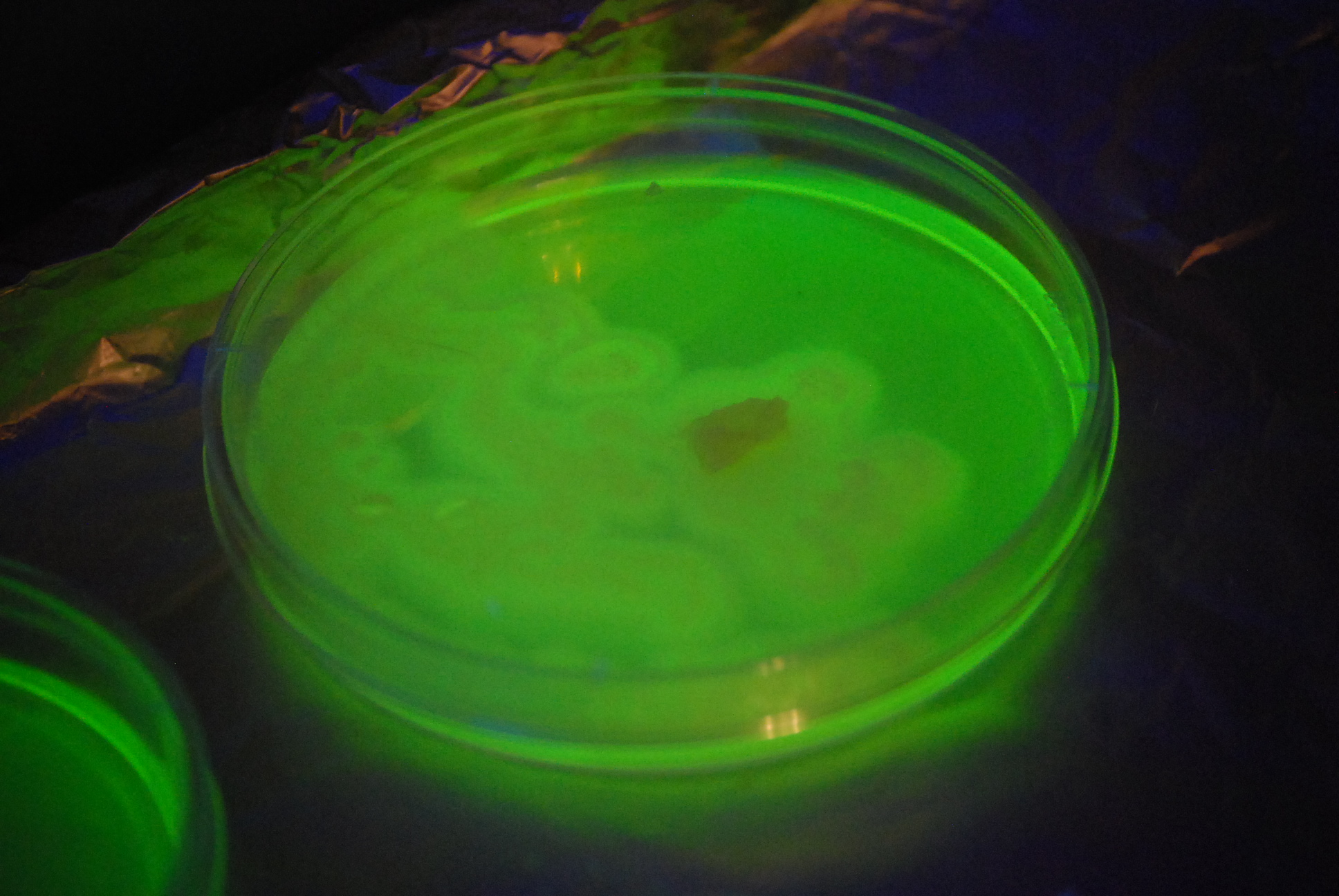
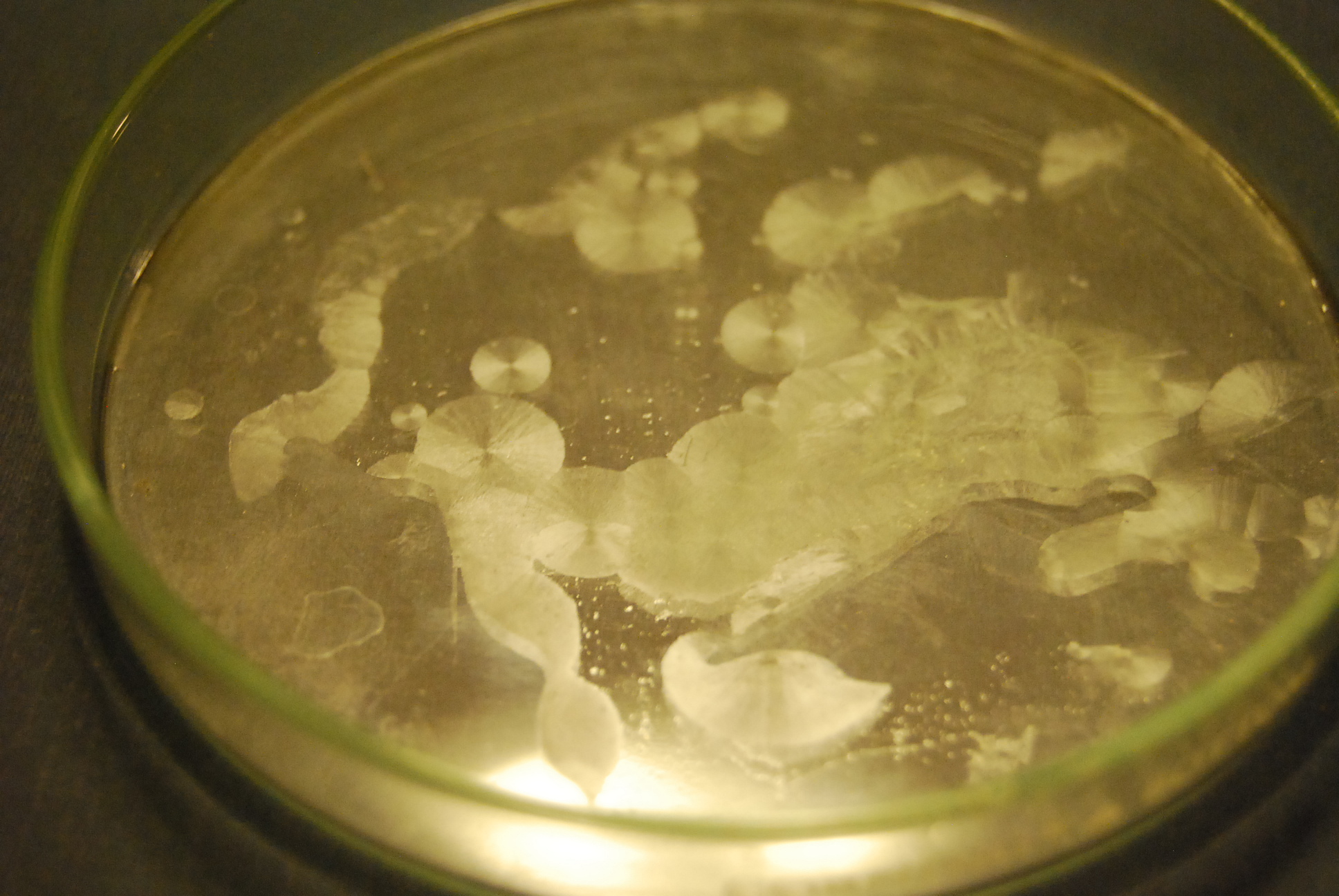
modified sabouraud w/ fluorescein and sulfate salts, then spot treatment with van urk's

I'd post pics, but some folks are paranoid about metadata (lol you won't find me with iphone pic metadata, I 100% guarantee it)
« Last Edit: November 09, 2011, 12:36:33 AM by aniracetam »
"Experiments are the only means of knowledge at our disposal. The rest is poetry, imagination." - Max Planck

Vesp

  • Administrator
  • Foundress Queen
  • *****
  • Posts: 3,130
Re: LSA bioreactor superpost
« Reply #49 on: November 09, 2011, 12:47:08 AM »
Just remove the metadata or post it anyways.. lol I don't care I'd rather see the pictures. :)
Just be careful about the info you share online.
Bitcoin address: 1FVrHdXJBr6Z9uhtiQKy4g7c7yHtGKjyLy

aniracetam

  • bioanalytical chemist
  • Subordinate Wasp
  • ***
  • Posts: 123
Re: LSA bioreactor superpost
« Reply #50 on: November 09, 2011, 12:57:29 AM »
sounds good, vesp. the reason I say it...is because that iphone isn't even registered to me, and GPS is off.
the pics are old, and I've moved twice since I took them (i'm very much under the radar)
« Last Edit: November 09, 2011, 01:01:32 AM by aniracetam »
"Experiments are the only means of knowledge at our disposal. The rest is poetry, imagination." - Max Planck

Vesp

  • Administrator
  • Foundress Queen
  • *****
  • Posts: 3,130
Re: LSA bioreactor superpost
« Reply #51 on: November 09, 2011, 12:58:56 AM »
Yeah feel free to share whatever, I'm sure you know the risks associated with whatever.
Bitcoin address: 1FVrHdXJBr6Z9uhtiQKy4g7c7yHtGKjyLy

akcom

  • Dominant Queen
  • ****
  • Posts: 430
Re: LSA bioreactor superpost
« Reply #52 on: November 09, 2011, 01:47:43 AM »
Extracting is going to be the easiest part in my opinion.  Culturing a strain that produces high alkaloid content is going to be the hardest part.  Extraction?  Just blend it.
ever tried extracting it? there's more to it than just blending it.
 the majority of the alks isn't even LSA...  mostly paspalic acid.
I should have been more clear.  From what I understand, extraction of the alkaloids is really as simple as blending and extraction with MeOH/DCM at the proper pH.  Obviously isomerization and hydrolysis with strong base is necessary to obtain ergine.

Quote
Quote
Is there a simple way to qualitatively determine alkaloid content?  For example, say I had a couple mycelium plates and I wanted to see which one was best producer.
modified sabouraud w/ fluorescein and sulfate salts, then spot treatment with van urk's

I'd post pics, but some folks are paranoid about metadata (lol you won't find me with iphone pic metadata, I 100% guarantee it)
Any way you could provide a reference for the fluorescent plates?  I'd just like to know about sulfate/fluorescein molarity.  Are you using the modified reagent outlined @ http://www.erowid.org/archive/rhodium/pdf/van.urk.indole.tlc.test.pdf ?

Seems like hour long developement times for the original van urke would be a real PITA
« Last Edit: November 09, 2011, 01:55:54 AM by akcom »

aniracetam

  • bioanalytical chemist
  • Subordinate Wasp
  • ***
  • Posts: 123
Re: LSA bioreactor superpost
« Reply #53 on: November 09, 2011, 02:00:55 AM »
Quote
Solid medium for plating: SP-agar: It contained g/l: sucrose, 300; casein-peptone, 10; KH,PO,,
0.5; MgSO, -7H,O, 0.5; FeSO,. 7H20,0.007;
ZnSO,. 7 H,O, 0.006; agar-agar, 18; and tap water to
volume. Before sterilization the pH of the medium was adjusted to 6.2 with ammonia (German pa-
tent, 1973). After sterilization 1.25 ml of 0.5% solution of fluorescein or 2',7'-dichlorofluorescein in
ethanol were added to 260 ml of the medium. This was poured into steril Petri dishes and when the
agar had solidified, placed in an incubator (24 "C)and left for some days before inoculating the
media.
Quote
The seed stage medium was modified after Hung. pat. (1967).It contained g/l: sucrose, 100; succi-
nic acid, 10; proflo, 10; Ca(NO,),, 1; KH,PO,, 0.25; MgSO,. 7 H20, 0.25; KCl, 0.12; FeSO,. 7 H20,
0.007; ZnSO, . 7 H,O, 0.006 in 1 1 of dest. H,O.
The production stage medium contained g/l: sucrose, 100;succinic acid, 10; Ca(NO,),, 1 ; KH,PO,,
0.3; MgSO, 7 H,O, 0.25; KCl, 0.12; NaCl, 20; FeSO, 7 H,O, 0.007; and ZnSO, 7 H,O, 0.006 i n
1 1 of dest. H,O. p H 5.2 in both media was adjusted with ammonia before sterilization.
Analytical methods : Growth of submerged cultures was determined by mycelial dry weight.
50 ml of broth were filtered, mycelium washed with water and dried a t 85 "C t o constant weight.
Alkaloids: Culture filtrate suitably diluted (2 ml) was mixed with VAN URK
reagent (4 ml) being prepared as described by AGURELL (1966) and the blue color determined spectrophotometrically
with reference t o the standard solution of ergotamino tartrate. Mycelial alkaloids were extracted from washed and homogenized mycelium with a mixture of acetone and 4% tartatric acid (1 : 1).
The collected extract was properly diluted with water and used for alkaloid determination as des-
cribed above. The same procedure as for mycelium was also used for the alkaloid determination i n
a single colony

using my own formula, 2% in 10% sulfuric (in 95% EtOH)
there exists a 1932 paper describing Van Urk's tests being developed in sunlight, works quite well. yes, it does take some time to develop, but not like it really matters. the whole ordeal is an exercise in patience anyway
« Last Edit: November 09, 2011, 02:10:31 AM by aniracetam »
"Experiments are the only means of knowledge at our disposal. The rest is poetry, imagination." - Max Planck

fresh1

  • conspirator
  • Dominant Queen
  • ****
  • Posts: 339
Re: LSA bioreactor superpost
« Reply #54 on: November 09, 2011, 02:21:41 AM »
Quote
From what I understand, extraction of the alkaloids is really as simple as blending and extraction with MeOH/DCM at the proper pH.  Obviously isomerization and hydrolysis with strong base is necessary to obtain ergine.

 Aren't you hoping to obtain LSA? I'm confused! ???


« Last Edit: November 09, 2011, 03:06:05 AM by Vesp »
"Curiosity is a gift"

akcom

  • Dominant Queen
  • ****
  • Posts: 430
Re: LSA bioreactor superpost
« Reply #55 on: November 09, 2011, 03:03:57 AM »
My mistake.  You are correct.  paspalic acid isomerizes to lysergic acid

fresh1

  • conspirator
  • Dominant Queen
  • ****
  • Posts: 339
Re: LSA bioreactor superpost
« Reply #56 on: November 09, 2011, 08:55:37 PM »
OK thanx,, confused no more!!! :D lol
"Curiosity is a gift"

overunity33

  • Subordinate Wasp
  • ***
  • Posts: 218
Re: LSA bioreactor superpost
« Reply #57 on: November 09, 2011, 09:13:28 PM »
the whole ordeal is an exercise in patience anyway

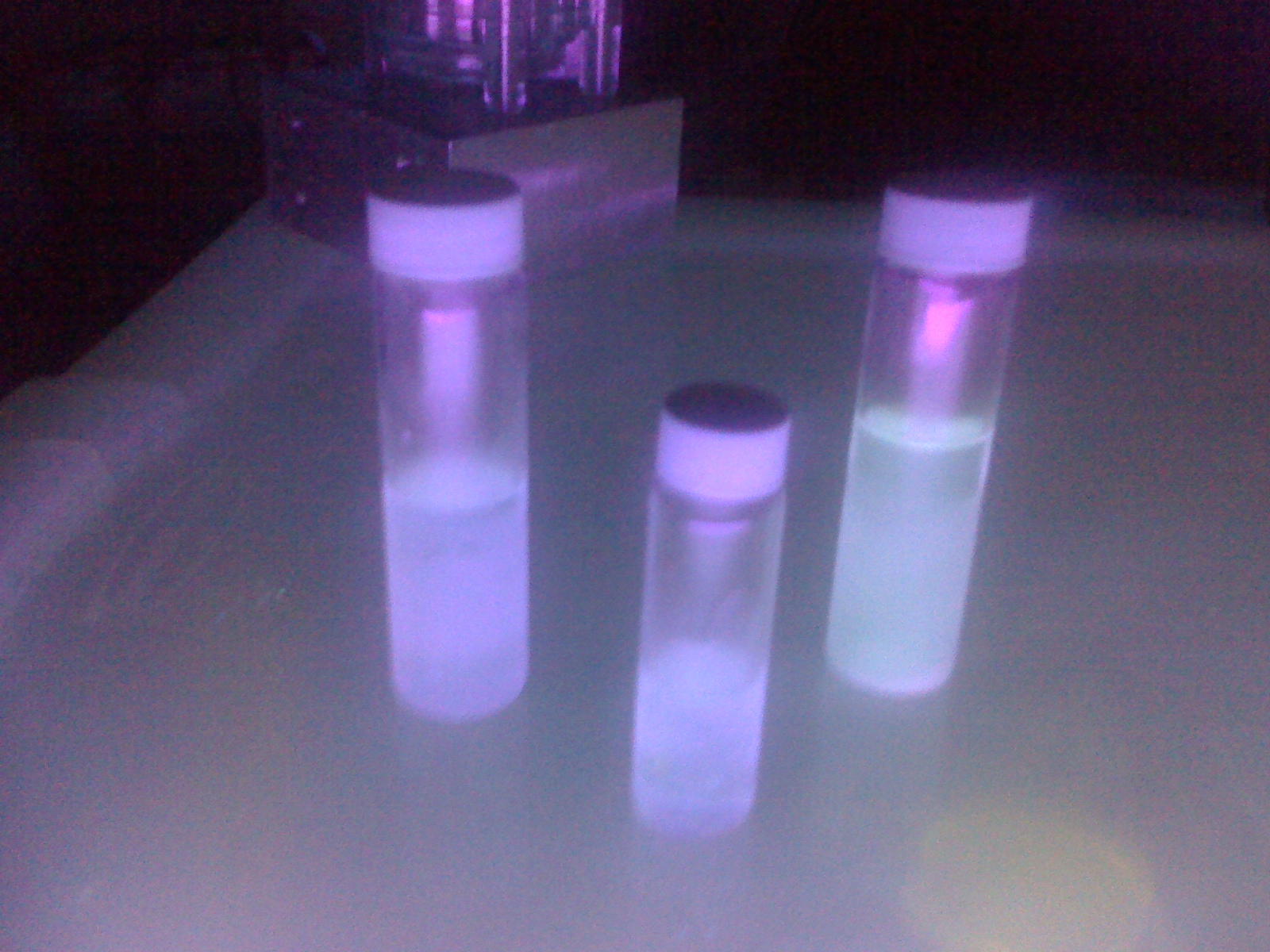
Those beautiful vials of alkaloids make it all worthwhile, good work.

Vesp, could you post a link to the Garcinol reference?  I remember seeing it a while back but can't find it.  That is what you would call a "disruptive" advance in this field, if any wild strain could perform neck to neck with the industrial ones.   I may know someone who has wild paspali samples this could be tested on if a good source of Garcinol could be found.

Vesp

  • Administrator
  • Foundress Queen
  • *****
  • Posts: 3,130
Re: LSA bioreactor superpost
« Reply #58 on: November 09, 2011, 10:01:51 PM »
http://127.0.0.1/talk/index.php/topic,1698.msg19057.html#msg19057

I think that is there?? not sure...

the article is titled... The ergot alkaloid gene cluster: Functional analyses and evolutionary aspects


:D

I think it is a game changer for sure, I also suspect other HATi's such as curcumin, ECGC, or  alkylresorcinols extracted from the grain at which they grow on (I.e rye grains have alkylresorcinols that I suspect act as HATi's and aid in the natural formation of ergot alkaloids in the sclerotia - It helps communicate to the fungi when the plant is forming seeds/seeding -- but that is just my imagination so don't think to highly of that - it just seems to make sense to me)
Bitcoin address: 1FVrHdXJBr6Z9uhtiQKy4g7c7yHtGKjyLy

aniracetam

  • bioanalytical chemist
  • Subordinate Wasp
  • ***
  • Posts: 123
Re: LSA bioreactor superpost
« Reply #59 on: November 10, 2011, 12:16:08 AM »
Quote

Those beautiful vials of alkaloids make it all worthwhile, good work.

thanks to the wasp who made it all possible. the work was my pleasure
"Experiments are the only means of knowledge at our disposal. The rest is poetry, imagination." - Max Planck