Author Topic: Lysergic amides to monohydrate?  (Read 439 times)

StonedOwlsley

  • Larvae
  • *
  • Posts: 7
Lysergic amides to monohydrate?
« on: September 14, 2011, 12:47:43 PM »
Hey all,
So a friend is about to do their first LSD synthesis in sealandia, and there's one part he's stuck at-synthesizing d-Lysergic Acid Monohydrate from Lysergic Acid Amides derived from HBWR seed.
Sorry if this question has been answered already, I looked on the forums and couldn't find much.

proposed tek: Extract LSA amides from HBWR seeds using DCM and MeOH, and cleaning with activated carbon or an acid base extraction (recommendations? Might as well do both, drop the impure LSA into solution with dilute HCl, swirl with carbon, filter, precipitate with either Nitrogen or dilute NaOH...suggestions?)

Then the tek calls for Lysergic Acid monohydrate to be refluxed with chloroform and diethylamine, then for phosphorous oxychloride to be added, the solution refluxed until amber, cooled and washed with dilute ammonium hydroxide, organic layer is dried with MGSO4 then concentrated, the residue is dissolved into MeOH, and LSD maleate is precipatated by adding methanolic maleic acid solution. Filter, wash with cold MeOH, and air dry.


DANDY!
My big query: HOW DOES ONE CONVERT LYSERGIC ACID AMIDE TO d-LYSERGIC ACID MONOHYDRATE? ALL the teks that don't produce significant amounts of iso-LSD called for monohydrate, and he doesn't want to pull a beginner's error first time round, use amides and wind up with something unusable. but of course he can't just go shopping around for Lysergic Acid Monohydrate.

THX so much for any help.
« Last Edit: September 15, 2011, 04:13:14 AM by StonedOwlsley »

Sedit

  • Global Moderator
  • Foundress Queen
  • *****
  • Posts: 2,099
Re: Lysergic amides to monohydrate?
« Reply #1 on: September 14, 2011, 01:35:37 PM »
On a subject of such serious nature as this synthesis I would advise to go back and edit out the I's and replace many of them with something more creative (No not your cat or swim) but remove as much 'intent' and "personal" from your post as possible and stick to the chemistry at hand ok.
There once were some bees and you took all there stuff!
You pissed off the wasp now enough is enough!!!

overunity33

  • Subordinate Wasp
  • ***
  • Posts: 218
Re: Lysergic amides to monohydrate?
« Reply #2 on: September 14, 2011, 08:27:51 PM »
You have to perform hydrolysis to get to Lysergic Acid.  Once you do that I believe you can add acid to pronate the zwitterion and it (LA) will crash out of solution.  You take this material which has precipitated and heat it under vacuum to get dry LA, this takes a while. 

You are using POCl3 method so the LA doesn't *have* to be dry like other methods, but it should help the yield.  Im not sure if its worth drying the LA and degrading it a little or running the reaction a little wet.  It comes down to what works better for you.

StonedOwlsley

  • Larvae
  • *
  • Posts: 7
Re: Lysergic amides to monohydrate?
« Reply #3 on: September 14, 2011, 11:13:17 PM »
Thx for the prompt help guys :)
@Sedit, apologies for ettiquette breach.
It is a friend of mine doing the synthesis in a country where he has permission from his local government to synthesize LSD. I put the story in the first person to make it an easier narrative, but I could understand how confusion could arise, if I actually carried out this procedure I would be in violation of many laws, which of course is not my intention.

@Overunity, I don't understand when you say pronate the zwitterion...Is this where the acid donates his proton to make the alkali a salt?
Basically, are you saying my friend should drop the Lysergic Acid Amide into solution with H20, run a current through to break off the amide and replace it with the monohydrate, and then salt it with say maleic or tartaric acid to precipitate, filter, wash with cold water?
I'm a little new to all this and I'm not getting in over my head, just trying to figure it out.
Is there a difference between d-Lysergic Acid Monohydrate and d-Lysergic Acid Hydrate? I've heard that monohydrate just means dry which doesn't make much sense.
@Overunity when you say the LA doesn't have to be dry because of the pocl3 method, is the "dryness" you refer to H20 contam from the hydrolysis? because the pocl3/diethylamine/chloroform solution gets dried with MgSO4 after reflux, so that shouldn't matter.
If you could outline specifics, or even better outline how I myself could calculate specifics for the LSA-LA hydrolysis, that would be much appreciated.
Again, I'm a little new to this but definitely learning about everything before taking crazy leaps of risk.

overunity33

  • Subordinate Wasp
  • ***
  • Posts: 218
Re: Lysergic amides to monohydrate?
« Reply #4 on: September 15, 2011, 04:49:59 AM »
you perform hydrolysis with a base like potassium hydroxide and water.  Just look up some examples from synth notes online, they all do the same thing, reflux in koh solution and then add acid to precipitate LA.  It doesnt need to be tartaric, you arent forming a salt that way.  I have seen sulfuric and acetic acid in examples.

StonedOwlsley

  • Larvae
  • *
  • Posts: 7
Re: Lysergic amides to monohydrate?
« Reply #5 on: September 16, 2011, 09:33:54 AM »
great, thanks for the tip. Do you think that because LSA is fairly delicate it would be safe to go with pH 8-9 for the reflux and then pH 5-6 for the salting? One could just add enough vinegar until no more LA precipatates, but again it would suck if a too acidic solution damaged the LA...thoughts? Would it be easier/practical to calculate molar mass of KOH LSA and Acetic Acid, balance the equation, and just have the same amount of moles in each solution? also how long do I reflux for, until it is not cloudy?
thanks so much for the help.

nk40ouvm

  • Pupae
  • **
  • Posts: 73
Re: Lysergic amides to monohydrate?
« Reply #6 on: September 16, 2011, 07:12:53 PM »
Despite its delicacy I don't think you will damage your product with acetic acid. I would avoid mineral acid. I would certainly not use vinegar; if you've ever used it to produce (e.g.) metal acetates you will have discovered that even the so-called distilled white product has a lot of crap in it other than acetic acid and water. Start with pure acetic acid. I'm going to assume that anyone who can complete LSD synthesis can get basic lab grade reagents.

StonedOwlsley

  • Larvae
  • *
  • Posts: 7
Re: Lysergic amides to monohydrate?
« Reply #7 on: September 17, 2011, 04:13:44 AM »
Naturally store vinegar wouldn't be appropiate, glacial acetic is in order. Vinegar is force of habit...
Thanks for the tip about avoiding mineral acids.
Does anyone know about appropriate pH? I'm thinking 8-9 for the reflux and then pH 5-6 for the salting? One could just add enough acid until no more LA precipatates...Would it be easier/practical to calculate molar mass of KOH LSA and Acetic Acid, balance the equation, and just have the same amount of moles in each solution?
Also, for how long would one reflux the KOH/LSA aqueous solution, until it is not cloudy?
thanks so much for the help.

letters

  • Subordinate Wasp
  • ***
  • Posts: 138
Re: Lysergic amides to monohydrate?
« Reply #8 on: September 21, 2011, 07:42:58 AM »
HWBR benefits from high ergine/isoergine amounts. extract anyway you like. the by far best methods in the literature, at least what im aware of are -
1. moisten the ground seed with ammonia and extract multiple times with diethyl ether until the extracted ether no longer exhibits fluorescence under black light.
or 2. extract with acetone/tartaric acid several times until no fluorescence is observed in the acetone.

a pre-extraction defatting process helps remove unwanted compounds and yields a cleaner product with fewer purification steps.

be mindful that the seeds will form a mush when either in the basic ammonia or the acidic acetone. filtration without elevated pressures (vacuum in not good enough, it is only 1atm) is impossible. what is routinely done in the literature is to use more solvent then needed and decant from the mush every time. this way there is some solvent loss (what is trapped in the seed mush), but no pressure filtration setup is needed. be prepared to use lots of solvent!
a not so known trick but a very very very helpful one is methanol manipulation.
ergine and isoergine are not very good at dissolving in methanol. after the initial extraction (and acid base clean up if you wish) one can dissolve the residue in a small amount of cold methanol and let sit in the freezer over night. what will not dissolve the following morning is mostly ergine with some isoergine. after filtration, reduce the methanol volume to half and stick again the freezer to get an isoergine rich fraction. yields are quite good and the ergine/isoergine are quite clean (except for the mutual contamination of both isomers). they are crystalline greyish looking solids.

base induced hydrolysis is not easy, and the ergine requires harsh conditions (~2-5M KOH, ~80C and prolonged time). this is because it is a primary amide.

Overunity wrote that when you acidify the post hydrolysis mix you get LA, and not a salt. THIS IS A FALSE STATEMENT! what you get is the salt of the LA and the acid you use (Lysergic moeity has 2 basic nitrogens, one not so basic - the indole nitrogen, and the other much more basic, the N-6 nitrogen). After acidification and filtration, you must neutralize this salt to get lysergic acid that can react further. this is usually done by using dilute ammonia (some use aq. some use alcoholic), and if you read carefully through the literature, you will see that this step is always done!

POCl3 is a good and proven route. newer routes are also good, but it all comes down to what reagents you have.

A much better methodology starting from ergine/isoergine would be to transamidate with a transition-metal catalyst and suitable ligand(s). there are several examples in the literature, the catalysts are selective, conditions are mild and yields are high.

overunity33

  • Subordinate Wasp
  • ***
  • Posts: 218
Re: Lysergic amides to monohydrate?
« Reply #9 on: September 21, 2011, 04:33:30 PM »
Overunity wrote that when you acidify the post hydrolysis mix you get LA, and not a salt. THIS IS A FALSE STATEMENT! what you get is the salt of the LA and the acid you use (Lysergic moeity has 2 basic nitrogens, one not so basic - the indole nitrogen, and the other much more basic, the N-6 nitrogen). After acidification and filtration, you must neutralize this salt to get lysergic acid that can react further. this is usually done by using dilute ammonia (some use aq. some use alcoholic), and if you read carefully through the literature, you will see that this step is always done!

my mistake, I was not aware that lysergic acid formed a salt, I thought it kind of formed a salt with itself, a zwitterion.  I thought the reason you pronate and depronate the zwitterion was to change solubilities, i was not aware you could form a LA salt.  This seems like the way to go for long term storage.

StonedOwlsley

  • Larvae
  • *
  • Posts: 7
Re: Lysergic amides to monohydrate?
« Reply #10 on: September 24, 2011, 10:15:34 PM »
Nice Letters, thanks for the insight. I can see how acidified acetone would be a very nice way to get the goodies out of the hbwr, and yes definitely a primary defat step will be done...that's what the DCM is for.
So basically what you're saying could be done is for the acetone to be evaporated, then the product re-dissolved into methanol, and then ergine and isoergine freeze-precipatated out.
Then take the ergine and its isomer friend into the 80C bath with 2-5M KOH (you say a prolonged time, is there any observable change that will take place?), then crash salts out with acetic acid, filter, and then neutralize the filtrates with dilute ammonia, and then evap the solution to yield LA monohydrate?
Right now the KOH reflux storyline is just making more sense, but I will definitely investigate your transamidate suggestion.
Thanks again for the help.
« Last Edit: September 24, 2011, 10:18:52 PM by StonedOwlsley »

letters

  • Subordinate Wasp
  • ***
  • Posts: 138
Re: Lysergic amides to monohydrate?
« Reply #11 on: September 26, 2011, 04:21:06 PM »
if you just evaporate the acidic acetone you will get a salt. the crystallization procedure i gave above is for the freebase, so a basification is needed before methanol crystallization.
DCM is less good for defatting, since it is no really truely a non polar. much better candidate would be the straight chain alkanes, 40-60 pet. ether works great.
tedious cleaning is needed for the lysergic acid product. without this cleaning you will end up with a blackish looking crystalline material that will be hard to take further to the next step and defiently complicates the cleaning up of the post amidation reaction.
you can try multiple water crystallizations of the lysergic acid, but expect considerable loss in yield. otherwise you can use chromatography to clean up the lysergic acid. cation exchange chromatography works especially well.

Sol Invictus

  • Larvae
  • *
  • Posts: 29
Re: Lysergic amides to monohydrate?
« Reply #12 on: September 30, 2011, 03:46:11 AM »

 Thank you Letters and Overunity33 for all of your input! In Sol's opinion, the hydrolysis procedure as described in "The Ergot Alkaloids" seems like the best route (can't remember which volume, but they are a series of journal refs in the 1930s if I recall correctly, mostly from one US journal). This is the KOH procedure but they form a residue of the basified alkaloid in one solvent and then dissolve it into another for completion of the hydrolysis and purification. The product is precip'd with H2SO4 and the reaction's completion is indicated via a titration of the ammonia evolved.

 Letters-- would you mind providing refs for both the extraction of the plant material as well as the transition metal ligand amidation? I have the Jew Ming Chao paper on A. nervosa, and the one on Ipomea extraction from the Ohio Botanical journal (that compares the alkaloid profiles of the strains "Heavenly Blue", "Flying Saucers", and "Wedding Bells"), but I am always looking to compare the different techniques and solvent pairs to get an idea of what is most efficacious.
 
 On the latter note concerning alkaloid extraction from plant material, what are thoughts on using bentonite or an ion exchange resin for extracting the alkaloids from the plant material, similar to the 'Kompot' process used with poppies? Does anyone have any refs where either the clay or the resin is used specifically with ergine? I remember seeing a patent that used one of these to extract alkaloids from an ergot liquid culture broth, but am curious to see how this would be applied to a plant extraction from A. nervosa or even the Ipomea spp. Anything to reduce the obscene amount of solvents required! That also brings us to the question of some kind of continuous extraction process that could recycle the solvents similar to a Soxhlet extractor, although the issues of heat and light damaging the ergine would need to be addressed (the continuously boiling solvent of a Soxhlet wouldn't work here as the constant exposure to heat would destroy the alkaloids).

 StonedOwsley-- I appreciate your enthusiasm as well as your humility, but I feel that the nature of some of your questions indicates a need for a greater understanding of some of the more basic principles involved herein. I get the feeling that whomever might be conducting these hypothetical experiments might run into obstacles not so much from not having the correct 'instructions' of how to proceed, but rather from a lack of effective lab technique and/or a misunderstanding of what is going on in the flask should things not happen according to what one has in one's notes/descriptions/refs/etc. The aforementioned alkaloids are highly prone to decomposition, and the hypothetical final product absolutely requires chromatography to render it the pure isomer (as well as to re-process the abundant amount of the inactive l-isomer-- don't you dare let that shit go to waste!).
 I do not mean to discourage you, rather I just want you to get a realistic picture of the level of work and discipline that goes into a project like this. If this project is your first such hypothetical synthesis undertaking, I would highly recommend working with some more 'forgiving' projects before jumping headfirst into this one, so you can al least get a feel for the equipment, technique, procedures, and science behind it all. Best of luck and be safe!!

  --Sol


letters

  • Subordinate Wasp
  • ***
  • Posts: 138
Re: Lysergic amides to monohydrate?
« Reply #13 on: September 30, 2011, 08:15:56 AM »
Acetone/Tartaric method :
New Sources of Ergoline Alkaloids within the Genus Ipomoea, by DIEGO AMOR-PRATS and JEFFREY B. HARBORNE, Biochemical Systematics and Ecology, Vol. 21, No. 4, pp. 455-462, 1993.
Sephadex isolation :
THE SEPARATION OF ERGOT AND CLAVINE ALKALOIDS BY GEL FILTRATION*, A. NIKOLIN and B. NIKOLIN, Phytochemistry, 1972, Vol. 11, pp. 1479 to 1480.

which Chao articles do you have? there are 2 interesting ones from 73

transamidation example :
Efficient Transamidation of Primary Carboxamides by in Situ Activation with N,N-Dialkylformamide Dimethyl Acetals. Thomas A. Dineen, Matthew A. Zajac and Andrew G. Myers. JACS, 2006, 128, 16406-16409.

« Last Edit: September 30, 2011, 08:27:12 AM by letters »

akcom

  • Dominant Queen
  • ****
  • Posts: 430
Re: Lysergic amides to monohydrate?
« Reply #14 on: September 30, 2011, 04:32:37 PM »
Efficient Transamidation of Primary Carboxamides by in Situ Activation with N,N-Dialkylformamide Dimethyl Acetals
Thomas A. Dineen, Matthew A. Zajac, and Andrew G. Myers
Journal of the American Chemical Society, 2006, 128 pp 16406–16409


Interesting paper for sure.  The only issue is the necessity of running a flash column to purify the intermediate formamidine
« Last Edit: September 30, 2011, 04:40:22 PM by akcom »

letters

  • Subordinate Wasp
  • ***
  • Posts: 138
Re: Lysergic amides to monohydrate?
« Reply #15 on: October 03, 2011, 11:27:41 PM »
chromatography is a friend, not a foe.

Wizard X

  • Lord of the Realms
  • Foundress Queen
  • *****
  • Posts: 1,224
Re: Lysergic amides to monohydrate?
« Reply #16 on: October 04, 2011, 05:30:05 AM »
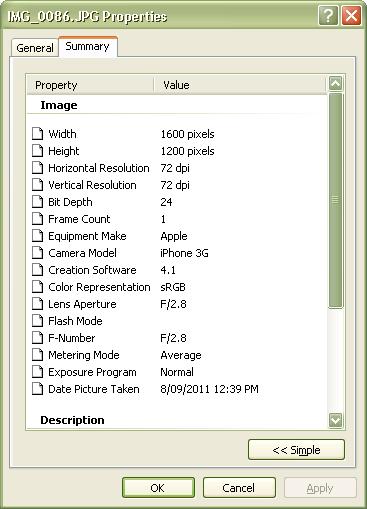
aniracetam: Read this http://127.0.0.1/talk/index.php/topic,2033.msg26205.html#msg26205 to remove metadata from your uploaded picture taken with your Apple IPhone.  ;)
Albert Einstein - "Great ideas often receive violent opposition from mediocre minds."

aniracetam

  • bioanalytical chemist
  • Subordinate Wasp
  • ***
  • Posts: 123
Re: Lysergic amides to monohydrate?
« Reply #17 on: October 04, 2011, 11:21:39 AM »
thanks
scanned with that prog, there's no potentially compromising metadata associated with that pic
(or any other of the pics I've uploaded). not sure if it matters, but the SIM is inactive, and I jailbroke it.
« Last Edit: October 04, 2011, 11:25:49 AM by aniracetam »
"Experiments are the only means of knowledge at our disposal. The rest is poetry, imagination." - Max Planck

Wizard X

  • Lord of the Realms
  • Foundress Queen
  • *****
  • Posts: 1,224
Re: Lysergic amides to monohydrate?
« Reply #18 on: October 05, 2011, 12:20:33 AM »
thanks
scanned with that prog, there's no potentially compromising metadata associated with that pic
(or any other of the pics I've uploaded).
not sure if it matters, but the SIM is inactive, and I jailbroke it.
Albert Einstein - "Great ideas often receive violent opposition from mediocre minds."

aniracetam

  • bioanalytical chemist
  • Subordinate Wasp
  • ***
  • Posts: 123
Re: Lysergic amides to monohydrate?
« Reply #19 on: October 05, 2011, 01:13:39 AM »
ok, and that stuff matters how?
"Experiments are the only means of knowledge at our disposal. The rest is poetry, imagination." - Max Planck