Author Topic: Homemade Polarimeter?  (Read 89 times)

Vesp

  • Administrator
  • Foundress Queen
  • *****
  • Posts: 3,130
Homemade Polarimeter?
« on: September 20, 2009, 07:19:30 PM »
Quote
A polarimeter is a laboratory instrument used to determine the angle of optical rotation of plane-polarized light passing through a sample of material.

I don't know how useful one of these could be to any of us, but they seem easy to make, and thought this could possibly be a good thread, maybe inspire someone, etc.. at least to some degree.. and they also seem expensive to buy. so I thought I'd create a thread on how I think one could be made for a low price... I don't know how well it would work though.

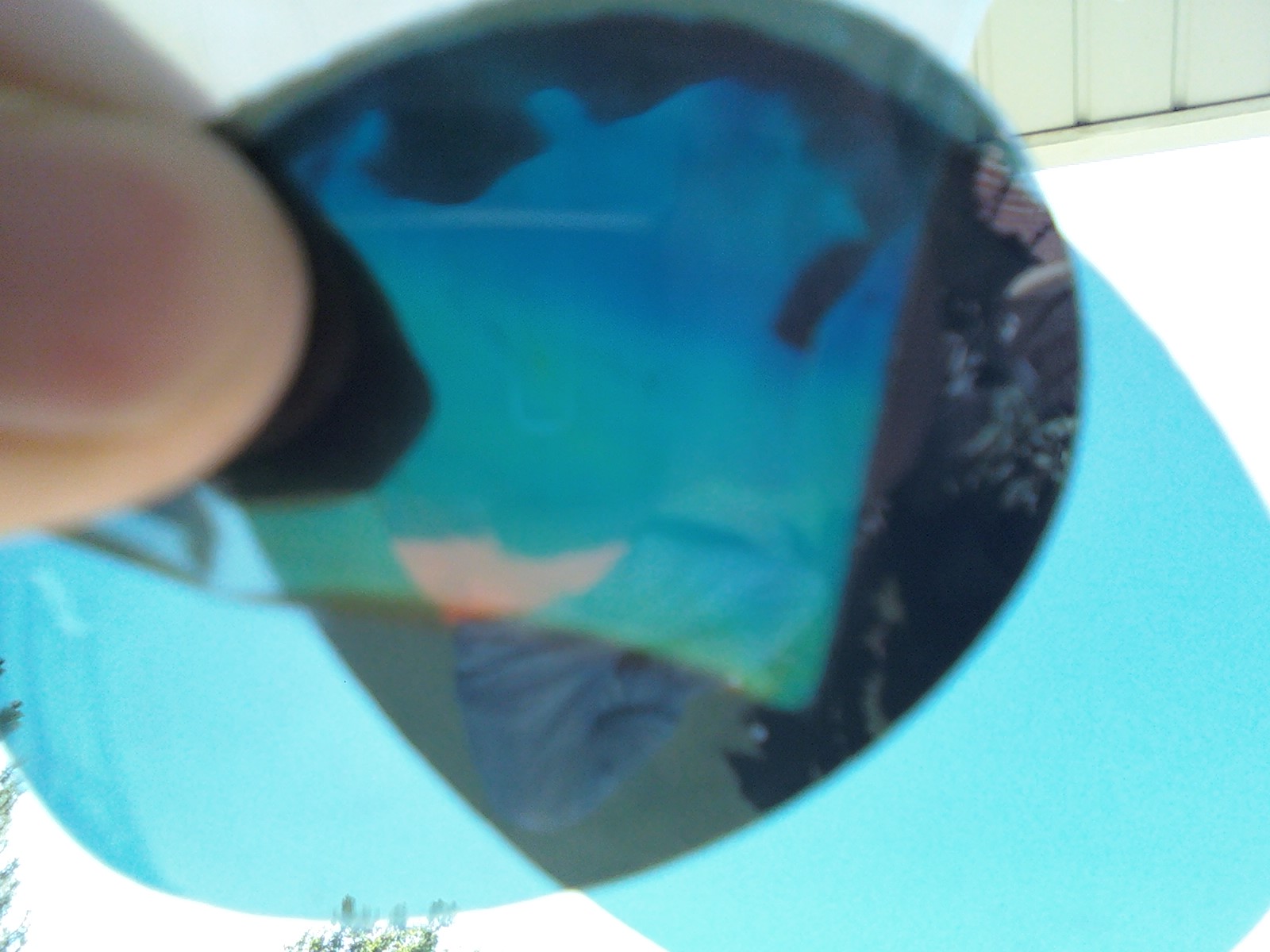
I took lenses out of a cheap pair of polarized sunglasses, tilted them so they blocked out all the light, and then I put a bottle, and a bag of high fructose corn syrup between them, light shown through! Tilting it showed different colors, ranging from blueish looking, to green, to orange-ish. It seems to me that with a bit of ingenuity and J-rigging, one could get some measurements out of this, and make it into a useful item.

Also just thought I'd mention things like:
the lenses are plastic, if that makes any difference, it may be problematic to use these since they are curved.. think it matters?

I don't remember the price of the glasses, but I believe they are pretty cheap, and are often sold for fly fishing to help reduce the glare and some how help you see further into the water. I'm sure they are sold for general use as well, and so they should be easy to get..

Also, apparently computer screens are polarized: http://www.youtube.com/watch?v=CJS6CwL2eQU
here is what this guy did: http://www.sciencebuddies.org/science-fair-projects/project_ideas/Chem_p073.shtml

Some good info on making a pretty nice one, I guess: http://www.markslaboratory.com/polarimeter.php

Anyways, whatever.

Just remembered: Thin plastic polarized sheets are often used in 3D glasses, probably can get one of these from a movie house.
« Last Edit: September 20, 2009, 07:26:53 PM by Vesp »
Bitcoin address: 1FVrHdXJBr6Z9uhtiQKy4g7c7yHtGKjyLy

Baba_McKensey

  • Subordinate Wasp
  • ***
  • Posts: 109
Re: Homemade Polarimeter?
« Reply #1 on: September 24, 2009, 10:35:42 PM »
Here's an interesting one.

lugh

  • Global Moderator
  • Foundress Queen
  • *****
  • Posts: 876
Re: Homemade Polarimeter?
« Reply #2 on: October 29, 2009, 04:30:35 PM »
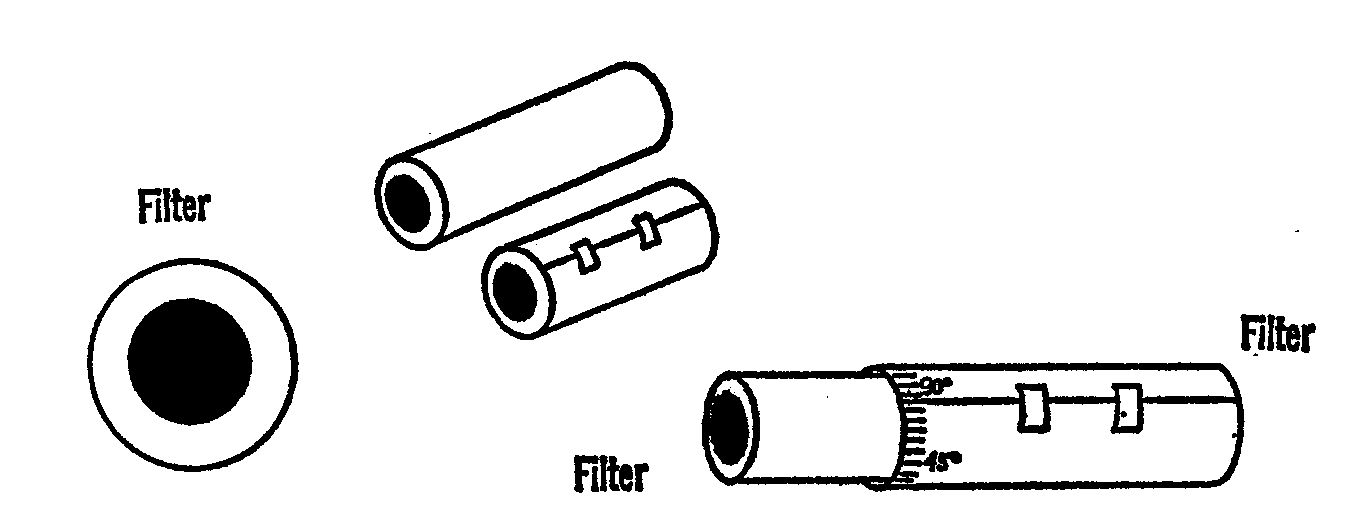
From Barrett's Build-It-Yourself Science Laboratory:

POLARIMETER
Purpose: A polarimeter is used to polarize or screen out certain light rays so that the effect of particular rays on crystals can be measured.
Materials: Cardboard tube from a toilet paper roll, piece of thin cardboard such as a file card, Polaroid filter or lens from a pair of Polaroid sunglasses.

What to Do: Wrap the file card around the cardboard tubing and fasten the file card with Scotch tape. Slide the file card tubing off the toilet roll tubing. Cut two round cardboard discs just large enough to cover the end of each of the two pieces of tubing. Cut a one-inch diameter hole in the center of each disc and glue or Scotch tape a Polaroid filter over each disc. Slip the smaller disc in the end of the toilet paper roll tubing and glue in place. Slip the other disc over the end of the roll tubing you made and glue in place. Slip the two pieces of tubing together. Look through the smaller tube end (analyzer) while you slowly turn the file card tubing (polarizer). You should reach a position where the light is completely blacked out. Mark the outside of both tubes for this position and label it 0°. Now divide the outside of the file card tubing into 360°. The mark just opposite the 0° mark should be labeled 180°. In this position you should not be able to see light through your polarimeter.

Operation of Equipment: In order to use the polarimeter, slide the two pieces of tubing apart and insert the crystal or material to be viewed into the end of the smaller tube. Slide the two pieces of tubing together and point the polarizer end toward a strong light source, such as a light bulb. Turn the polarizer end slowly until the light through the crystal is at its darkest, probably a dark blue. Look at the scale on the analyzer end of the tube and see how many degrees you had to turn the polarizer from zero and what direction you had to turn it. Each crystal has an angle of polarization. Some crystals require you to turn the polarizer clockwise while others require a counterclockwise direction. This is determined by the way the crystal is grown.

Can You Work like a Scientist?
1. Twist a piece of Scotch tape and fasten it into the opening of the small tube. When the polarizer is set on zero, do you see any light coming from the Scotch tape? Which way do you have to turn the polarizer in order to darken the light rays to dark blue?
2. Try several thicknesses of Scotch tape. Does the thickness of the material have anything to do with the number of degrees the polarizer is turned?
3. Place crystals in the tube. What direction and how many de­grees must you turn the file card tube in order to turn the light rays to dark blue?


Other materials can be used for the tubes, and polarized camera lenses are available at a low price. Solutions of chiral compounds can be evaluated as well  8)
« Last Edit: October 29, 2009, 04:35:19 PM by lugh »
Chemistry is our Covalent Bond

ChesireCat

  • Larvae
  • *
  • Posts: 30
Re: Homemade Polarimeter?
« Reply #3 on: October 29, 2009, 08:42:29 PM »
Thanks Lugh! Just what I needed!

CC

Prepuce1

  • Pupae
  • **
  • Posts: 96
Re: Homemade Polarimeter?
« Reply #4 on: November 11, 2009, 05:06:32 AM »
Lugh, thanks for the instructions. I could swear I read that a polarimeter could be used with a soluition of the compound you want to measure, and not just crystals. Is that not true, or is this just a limitation of this particular project?

Thanks,
PP