Author Topic: Monomethylation of tryptamines  (Read 543 times)

Methansaeuretierchen

  • Larvae
  • *
  • Posts: 27
Monomethylation of tryptamines
« on: November 15, 2010, 09:06:16 AM »
Hello there.
Are there any recipes/references on monomethylation or monoalkylation of tryptamines with NaBH4?

I interested in the synthesis of an 5-substituted N-Methyltryptamine.
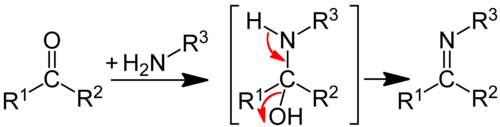
Plan right now is azeotropic destillation of the tryptamine with aq. formaldehyde in toluene to get the imine and reduction of this with NaBH4, but the major problem is that tryptamines, NaBH4 and maybe the imine does not dissolve in toluene.  
« Last Edit: November 17, 2010, 06:22:01 AM by Enkidu »

Tsathoggua

  • Autistic sociopath
  • Foundress Queen
  • *****
  • Posts: 662
Re: Monmyethylation of tryptamines
« Reply #1 on: November 15, 2010, 03:32:53 PM »
You aren't hoping to do an eschweiler-clarke methylation are you? if so you are shit out of luck, unless perhaps it can be performed in either slightly basic, or very, VERY carefully buffered conditions, even then I think not. Unless done incredibly cautiously, if then only a maybe.

Eschweiler-Clarke on a tryptamine under acidic conditions will lead to cyclization, Pictet-Spengler style to the corresponding beta-carboline.

^ The Eschweiler-Clarke methylation is always acidic, whether formic acid or oxalic acid is used. - Enkidu

Some beta-carbolines do have some interesting pharmacology, there are GABAa antagonists/inverse agonists of extremely high affinity/process, beta-carboline GABA positive allosteric modulators, RIMA type monoamine oxidase inhibitors, and even the fluorescence of scorpion chitin is apparently due to a beta-carboline.

And there is even the possibility, as Shulgin mentioned in passing, for a sort of alkyl-bridged methylated harmine derivative to act as an MPTP-esque dopaminergic neurotoxin.

Makes me wonder if there are any beta-carbolines with 5HT2a agonist activity to be discovered, or any expressing agonist activity at 5HT1a, which would make for a good anxiolytic, and excellent potential painkiller.

Yes, there are beta-carbolines which act as agonists at the 5-HT2A. Please keep your posts germane. The topic of the thread does not cover the activities of beta-carbolines. - Enkidu


« Last Edit: November 17, 2010, 05:48:27 AM by Enkidu »
Nomen mihi Legio est, quia multi sumus

I'm hyperbolic, hypergolic, viral, chiral. So motherfucking twisted my laevo is on the right side.

atara

  • Dominant Queen
  • ****
  • Posts: 256
Re: Monmyethylation of tryptamines
« Reply #2 on: November 15, 2010, 05:57:46 PM »
Well, there are a few options...

The easiest is probably the use of caesium salts as a catalyst. In the presence of Cs+, a stoichiometric amount of methylating agent will form the secondary amine but no higher amines:

http://www.erowid.org/archive/rhodium/pdf/amine.alkylation.cesium-effect.pdf

The following method should not be for trypamines due to the formation of the iminium intermediate - Enkidu
******

Another is through the benzaldehyde imine intermediate. This is described on Rhodium:

http://www.erowid.org/archive/rhodium/chemistry/amphetamine.methylation.html

Quote
p-Methoxyphenethylamine, generated from 100 g (0.536 mole) of the hydrochloride by stirring with conc. aq NaOH, was treated with 100 ml of benzene (toluene could be substituted) and 70 g (0.66 mole) of benzaldehyde. A mildly exothermic reaction began at once. The mixt was heated under reflux until no more H2O was present in the condensate (ca. 1 hr), then, without cooling, an attached Dean-Stark trap was removed and a soln of 82 g (0.65 mole) of Me2SO45 in 200 ml of benzene (toluene could be substituted) was added through the condenser at such a rate as to maintain reflux (15 min). The 2-phase mixt was heated for 90 min on the steam bath, cooled slightly, treated with 200 ml of H2O, and heated for an addn 20 min. After cooling in ice, the aqueous layer was washed twice with Et2O to remove unreacted benzaldehyde and made strongly basic with 50% aq NaOH. Two Et2O exts of the basic aqueous phase were added to the amine layer which separated, and the resulting solution was evacuated at the aspirator for 30 min, leaving 90 g (102%) of crude N-methyl-p-methoxyphenethylamine. This material was dissolved in 500 ml of 20% abs EtOH-Et2O and treated with 50 ml of conc HCl with swirling and cooling to yield the white, cryst hydrochloride, which was washed thoroughly with ice-cold 20% EtOH-Et2O and dried, mp 185.5-186.5°C. The yield was 83 g (77%).

I suspect, though I do not know, that vanillin may safely substitute for benzaldehyde in this instance -- it has all the right parts in all the right places. The major limitation of this method is that the intermediate imine is not very nucleophilic and so a stronger methylating agent must be used, or the methylation must be performed under reflux (dimethyl sulfate will alkylate amines at room temperature in minutes, but the tek requires a lengthy reflux. A weaker agent like methyl bromide would probably not work at all!).
******

The third method is the formation of the N-formyl intermediate and the reduction thereof. Amide reduction is typically carried out with lithium aluminium hydride, a difficult-to-obtain and highly dangerous reagent, which is probably not an option for most bees. Amides can also be reduced by the combined action of phosphoroyl chloride and sodium borohydride, though phosphoroyl chloride is not much safer. POCl3 can be prepared OTC, at least.

I believe Tsathoggua is correct in saying that an attempt at reductive amination with formaldehyde will result largely in the beta-carboline rather than the desired N-methyl tryptamine.

^ This is also incorrect. The primary tryptamines cannot be methylated to the tertiary amine using reductive methylation (as with tryptamine to DMT), but they can be methylated to the secondary amine because the iminium ion is never formed. - Enkidu

I'm going to tentatively recommend caesium salts. I know of at least one Chinese chemical company that supplies caesium salts and would probably ship no questions asked. There are probably others as well.
« Last Edit: November 17, 2010, 05:49:02 AM by Enkidu »

Methansaeuretierchen

  • Larvae
  • *
  • Posts: 27
Re: Monmyethylation of tryptamines
« Reply #3 on: November 16, 2010, 08:37:13 AM »
Whuups, I accidentally deleted this post.  :-[  Maybe an admin can go through the posts edit history and restore the original version. Or, if anyone else has one, send a copy to me via PM.  - Enkidu
« Last Edit: November 17, 2010, 05:45:12 AM by Enkidu »

letters

  • Subordinate Wasp
  • ***
  • Posts: 138
Re: Monmyethylation of tryptamines
« Reply #4 on: November 16, 2010, 01:04:08 PM »
the imine is going to be tricky to make. iirc klute from sciencemadness has posted a route for mono-methylation of amines with methyl tosylate, easily made from tosyl chloride and methanol i think. the post is here http://www.sciencemadness.org/talk/viewthread.php?tid=12542
prep of the methyl tosylate is here http://www.sciencemadness.org/talk/viewthread.php?tid=11004
his methodology calls for making the benzylideneamine (imine from benzaldehyde and amine), then methylation with methyl tosylate then hydrolysis of the bezylidene moiety to give the methylated amine. I think this is your best bet to get the n-methyltryptamine with ease.

Again, this method suffers from the same iminium intermediate drawback that atara's second method does. - Enkidu
« Last Edit: November 18, 2010, 11:29:38 AM by Enkidu »

atara

  • Dominant Queen
  • ****
  • Posts: 256
Re: Monmyethylation of tryptamines
« Reply #5 on: November 16, 2010, 03:11:28 PM »
Quote
Do you have a reference for the POCl3/NaBH4 reduction? Is BH3*THF also the in situ produced reduction agent?

http://pubs.acs.org/doi/abs/10.1021/jo00432a010

It's not BH3; rather POCl3 forms a complex with the amide allowing it to be more easily reduced.

Bluebottle

  • Subordinate Wasp
  • ***
  • Posts: 125
Re: Monmyethylation of tryptamines
« Reply #6 on: November 17, 2010, 02:11:35 AM »
I'm not sure about the benzaldehyde imine derivative, it might be liable to undergo pictet-spengler cyclisation. Is it possible that the iminium intermediate in the POCl3/NaBH4 might cyclise as well? But if I recall correctly the furfural imine does not (easily) (of either tryptamine or tryptophan). In that case it might be a useful trick for monomethylation; furfural itself is easily enough prepared. However it would be best to keep at higher pH and on the cooler side because it CAN cyclise http://www.relaquim.com/archive/2007/p2007353-58.pdf

First, the imine condensation product of benzaldehyde and tryptamine will not cyclicize on its own. Second, the analogous condensation product with furfural will work no better than with benzaldehyde when the goal is a monomethylated tryptamine. Yes, it's due to the iminium intermediate. - Enkidu

I haven't seen any reports of the cesium catalyst attempted in this context, but by all means it looks worth a try.

The last of my three cents, if a suitable PTC can be found (TBAB I think) microwaves will facilitate a direct alkylation of an amide, ahem, like an acetamide, and Me2CO3 ought to work swimmingly for that. Although as Jon pointed out, it may be somewhat difficult to hydrolyse. http://www.hsc.wvu.edu/sop/compchem/mdpi/molecules/papers/41100333.pdf
« Last Edit: November 17, 2010, 05:59:41 AM by Enkidu »
"And now we divide both sides by zero..."

Enkidu

  • Global Moderator
  • Foundress Queen
  • *****
  • Posts: 677
Re: Monmyethylation of tryptamines
« Reply #7 on: November 17, 2010, 05:04:48 AM »
The Pictet-Spengler condensation will only occur as a competing side reaction if an imine's carbon is more electrophilic than an imine uninfluenced by mesmeric or inductive effects of nearby atoms or moieties [Edit: other than a hydrogen or alkyl chains]. Most of the time, an iminium moiety provokes the cyclization; however, the carbon can be made sufficiently electrophilic through mesomeric or inductive effects.

The direct reduction of an imine by borohydride will not induce the undesired condensation. The hydride lost by the borohydride itself attacks the electrophilic carbon, whereupon the amide (the negatively charged nitrogen, i.e., a primary or secondary amine's conjugate base) deprotonates a protic donor, usually the alcohol used as a solvent.

I will now edit for correctness other posts in this thread..

===

(Thanks to ender and Murphy for this one.)

The Pictet-Spengler condensation: a new direction for an old reaction
Eric D. Cox, James M. Cook
Chem. Rev., 1995, 95 (6), pp 1797–1842
« Last Edit: November 17, 2010, 06:21:36 AM by Enkidu »

Enkidu

  • Global Moderator
  • Foundress Queen
  • *****
  • Posts: 677
Re: Monmyethylation of tryptamines
« Reply #8 on: November 17, 2010, 06:11:25 AM »
Hello there.
Are there any recipes/references on monomethylation or monoalkylation of tryptamines with NaBH4?

I interested in the synthesis of an 5-substituted N-Methyltryptamine.
Plan right now is azeotropic destillation of the tryptamine with aq. formaldehyde in toluene to get the imine and reduction of this with NaBH4, but the major problem is that tryptamines, NaBH4 and maybe the imine does not dissolve in toluene.  

Why not use methanol as the solvent?
« Last Edit: November 17, 2010, 06:17:52 AM by Enkidu »

Methansaeuretierchen

  • Larvae
  • *
  • Posts: 27
Re: Monomethylation of tryptamines
« Reply #9 on: November 17, 2010, 12:06:37 PM »
Why not use methanol as the solvent?
Direct use of methanol as solvent to form imine will cause low yields because the formaldehyde solution contains 65% water which would push the equilibrium towards the educts (water is a byproduct of imine formation).

The idea of azeotropic destillation with toluene is to remove the water and push the equilibrium of the reaction towards the imine.

But yes methanol could be used if the imine is stable under dry conditions.
It might be possible to remove most of the toluene by destillation and then add dry MeOH/EtOH/IPA etc. and then NaBH4 to reduce the isolated imine.
But it may be still a problem that tryptamines are nearly insoluble in toluene.

What do you think about that?
« Last Edit: November 17, 2010, 12:50:26 PM by Enkidu »

Enkidu

  • Global Moderator
  • Foundress Queen
  • *****
  • Posts: 677
Re: Monomethylation of tryptamines
« Reply #10 on: November 17, 2010, 12:49:55 PM »
The imine and NaBH4 are both soluble in methanol. I wasn't suggesting a solvent for the condensation of the aldehyde and the amine: I was suggesting a different solvent for the reduction.

Just use paraformaldehyde instead of aqueous formaldehyde.

atara

  • Dominant Queen
  • ****
  • Posts: 256
Re: Monomethylation of tryptamines
« Reply #11 on: November 18, 2010, 11:21:27 AM »
A more practical reductant for amides is zinc borohydride, which is much easier to obtain and produce and far safer to handle than LiAlH4. It doesn't seem very well-known, so it's probably worth mentioning.

http://www.erowid.org/archive/rhodium/pdf/zinc.borohydride.pdf

Also, and I didn't think of this before, the use of the POCl3 reduction for a tryptamine amide will likely result in the same condensation that is problematic with the benzaldehyde route. The POCl3-amide complex is, after all, the active alkylating agent in the Vilsmeier-Haack reaction.

@Enkidu: the method you blocked out was the second method I suggested, not the first. The first method was the use of caesium salts as a catalyst.

Methansaeuretierchen

  • Larvae
  • *
  • Posts: 27
Re: Monomethylation of tryptamines
« Reply #12 on: November 18, 2010, 02:33:27 PM »
A more practical reductant for amides is zinc borohydride, which is much easier to obtain and produce and far safer to handle than LiAlH4. It doesn't seem very well-known, so it's probably worth mentioning.

http://www.erowid.org/archive/rhodium/pdf/zinc.borohydride.pdf

Also, and I didn't think of this before, the use of the POCl3 reduction for a tryptamine amide will likely result in the same condensation that is problematic with the benzaldehyde route. The POCl3-amide complex is, after all, the active alkylating agent in the Vilsmeier-Haack reaction.

@Enkidu: the method you blocked out was the second method I suggested, not the first. The first method was the use of caesium salts as a catalyst.
Zn(BH4)2 is well known reduce amides but will also reduce the indol-core under usual conditions, as well as NaBH4 in acetic acid etc.
And lewis acids may also lead to cyclisation of tryptamines, so Zn(BH4)2 isn't a real option here I think.

But LiBH4 may work here... but I can't find any refs on LiBH4 used in reduction of amides

POCl3 is hard to obtain for me. :( But I would love to give it a try
« Last Edit: November 18, 2010, 02:41:00 PM by Methansaeuretierchen »

Methansaeuretierchen

  • Larvae
  • *
  • Posts: 27
Re: Monomethylation of tryptamines
« Reply #13 on: November 20, 2010, 06:29:04 AM »
a try today...

A friend added ~5g 5-subst. tryptamine base to ~3ml 35% aq. formaldehyde (calculated 1,2eq) and mixed it with ~225ml toluene.
After 3h azeotropic destillatiion (magnetic stirring) toluene became green like strong green tea and no more water was colected. Most toluene was destilled off after that (to about 50 ml), a clear liquid was obtained. (I thought imine doesn't dissolve in toluene!?)

100ml IPA was added, a white precipitate formed!(? what is it)

2g NaBH4 added... mstirred... nothing happened.

100ml MeOH was added... H2 began to bubble... a lot sticky alien-like mass formed (like thick green honey) and it was stirred for 30min.

Some 25% aq. AcOH was added to destroy NaBH4... lot H2 bubbled. Alien-mass didn't dissolve.

Solution was decanted from the alien-mass and 400ml water was added. Solution became cloudy. Extracted twice with 100 ml toluene (no effect, some NaCl was neccessary to break up emulsion) and twice with 100 ml petrol ether (fraction 90-140°C). The petrol ether removed the clouds completly and made solution clear. 50% NaOH and some ice cubes was added. A white precipitate formed and was filtered and washed with 200 ml 5% aq. NH4OH.

The product is currently drying... maybe ~500 mg only

There's no TLC made yet. Maybe the product is only recycled 5-subst. tryptamine, but I don't think so.

Why is the yield so low and wha't this green alien-mass formed? Btw. the alien-mass is became cristalline and does not dissolve in aq. HCl or aq. AcOH at all.

thx

EDIT: Yield so far 1,2g (dry)
« Last Edit: November 21, 2010, 07:46:53 PM by Methansaeuretierchen »

Enkidu

  • Global Moderator
  • Foundress Queen
  • *****
  • Posts: 677
Re: Monomethylation of tryptamines
« Reply #14 on: November 20, 2010, 07:08:53 PM »
How was your 5-subbed tryptamine prepared? Has it been characterized (MP test, spectroscopy, derivatives, etc)? According to this, tryptamine isn't soluble in benzene, so I doubt that it's soluble in toluene either.

The alien mass is definitely some type of polymerization (tar), but I don't have any good ideas about why it formed yet.

Methansaeuretierchen

  • Larvae
  • *
  • Posts: 27
Re: Monomethylation of tryptamines
« Reply #15 on: November 21, 2010, 04:04:17 PM »
How was your 5-subbed tryptamine prepared? Has it been characterized (MP test, spectroscopy, derivatives, etc)? According to this, tryptamine isn't soluble in benzene, so I doubt that it's soluble in toluene either.

The alien mass is definitely some type of polymerization (tar), but I don't have any good ideas about why it formed yet.
By addition of NaOH to a solution of the hydrochloride in destilled water, filtratation and washing with 5% NH4OH, destilled water and petrol ether. I'm pretty sure its the right tryptamine, but I'm not sure about its purity.

And yes the freebase is insoluble in toluene, but after ~3h on reflux and removal of some toluene it dissolved (maybe due imine formation...?).

Total yield so far: 1,2g from about 5g starting-T
« Last Edit: November 21, 2010, 07:50:38 PM by Methansaeuretierchen »

Enkidu

  • Global Moderator
  • Foundress Queen
  • *****
  • Posts: 677
Re: Monomethylation of tryptamines
« Reply #16 on: November 22, 2010, 04:21:10 AM »
100ml IPA was added, a white precipitate formed!(? what is it)
That's something I really don't understand. What concentration was the isopropanol? Anhydrous?

Edit: You really need to do a MP test and develop a spot with TLC.
« Last Edit: November 22, 2010, 06:40:04 AM by Enkidu »

Methansaeuretierchen

  • Larvae
  • *
  • Posts: 27
Re: Monomethylation of tryptamines
« Reply #17 on: November 23, 2010, 07:53:17 AM »
100ml IPA was added, a white precipitate formed!(? what is it)
That's something I really don't understand. What concentration was the isopropanol? Anhydrous?

Edit: You really need to do a MP test and develop a spot with TLC.
The IPA was 99,5% per Synthesis. First was thought IPA might be best choice as reduction solvent because it does not react with NaBH4 (I think due bad soloublity of NaBH4 in the toluene/IPA mix). But as there was no reaction observed some MeOH had to be added.

Maybe direct alkylation in MeOH (1,2 eq paraformaldehyde in MeOH, the tryptamine, ~3h RT and reduction with NaBH4) is tried next. Because it's hard to obtain paraformaldehyd here, the same with waterfree acetaldehyde might be tested first.
I made this many times for N-Benzylation of other primary amines and it worked well everytime in ~70%+ yields.
Hope it works as well with shorter aldehydes and maybe ketones .. but I can't find any refs for shorter aldehydes but many with bigger aldehydes... maybe no coincidence.
« Last Edit: November 23, 2010, 07:57:13 AM by Methansaeuretierchen »

Enkidu

  • Global Moderator
  • Foundress Queen
  • *****
  • Posts: 677
Re: Monomethylation of tryptamines
« Reply #18 on: November 23, 2010, 09:59:46 PM »
Maybe direct alkylation in MeOH (1,2 eq paraformaldehyde in MeOH, the tryptamine, ~3h RT and reduction with NaBH4) is tried next. Because it's hard to obtain paraformaldehyd here, the same with waterfree acetaldehyde might be tested first.
I made this many times for N-Benzylation of other primary amines and it worked well everytime in ~70%+ yields.
Hope it works as well with shorter aldehydes and maybe ketones .. but I can't find any refs for shorter aldehydes but many with bigger aldehydes... maybe no coincidence.

I assume that you're talking about driving amine + aldehyde <--> imine + water equilibrium to the right by removing the water using the properties of the toluene/water(/formaldehyde?) azeotrope. IIRC formaldehyde will distill over with the water as a maximum of 8% (i.e., if you were boil the formalin alone). I don't know for sure whether the toluene will break that azeotrope, but probably not.

jon

  • Foundress Queen
  • *****
  • Posts: 1,883
Re: Monomethylation of tryptamines
« Reply #19 on: November 24, 2010, 12:42:00 AM »
according to balwin's rules of cylization just forming the imine may lead to the beta carboline let's
see
table 5 exo  digonal sp2.

http://en.wikipedia.org/wiki/Baldwin%27s_rules